
Reviewed · STARGAZING & ASTRONOMY NIGHTS
The Night Sky Star Story, Galaxy, and Sedona Story Tour
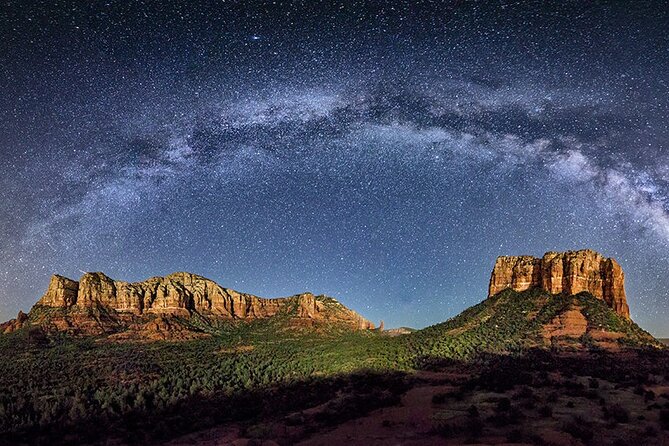
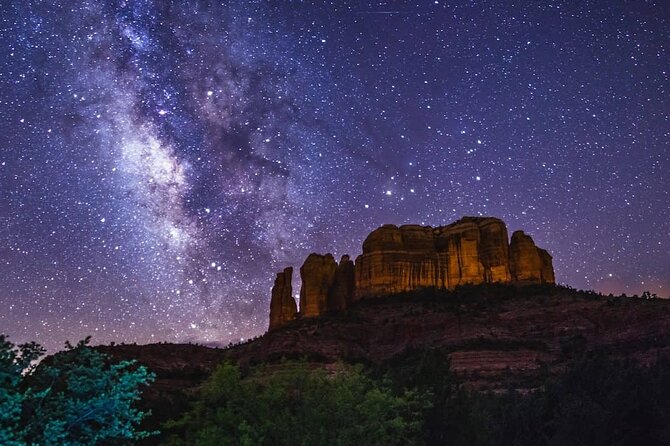
Sedona at night gets you quiet fast. This 2-hour star story experience pairs constellation myths with big-picture astronomy using visuals like a Milky Way model and a planisphere, all aimed at what you can spot with your own eyes. I like that it stays grounded in the sky in front of you, not a tech demo.
What I really love is the way the guide turns the heavens into something you can follow in real time. With a small group (up to 15) and seating set up on location, you’re not hunting for a spot or craning for answers—you’re learning where to look and why it matters.
The main thing to consider is that this is more “guided learning” than “sit back and stare.” If you want mostly hands-on star finding with minimal story, or if you’re hoping for purely quiet stargazing, the emphasis on storytelling may feel like a lot on some nights.
In This Review
- Key highlights to know before you go
- Entering Sedona’s night sky at 7:30 pm
- A single night-sky location with real seating
- Stop 1 in Sedona: the sky you can see when the moon cooperates
- Stop 2: how Greek myth and Indigenous sky stories are taught
- Stop 3: big-picture astronomy built for your naked-eye view
- Stop 4: staying oriented using playful visuals and real-time pointing
- What you’re likely to see (and what could change)
- Dress for warmth: this is an outdoor show
- Who this tour is best for
- Price and value: what $100 buys you in practice
- Should you book it? My honest call
- FAQ
- How long is the Night Sky Star Story, Galaxy, and Sedona Story tour?
- Where does the tour start and end?
- What time does it start?
- Is this a telescope tour?
- What language is the tour offered in?
- What comfort items are provided?
- What should I bring with me?
- Are pets allowed?
- What group size should I expect?
- What happens if it’s cloudy?
- Is mobile ticketing used?
Key highlights to know before you go
- Naked-eye astronomy, no telescopes: you learn patterns, motion, and perspective without waiting for equipment.
- Greek myth plus Indigenous sky connections: the stories are part of the point, not an afterthought.
- Tools you can actually understand fast: planisphere, a playful Milky Way setup, and a big-screen star app are used to explain what you’re seeing.
- Comfort included: chairs, blankets, and hand warmers help you stay outside comfortably.
- The guide effect: the experience is powered by an energetic, funny local teacher who keeps the group engaged and points things out with a laser pointer.
- Weather-first realism: clouds happen sometimes, and you still have options if the sky doesn’t cooperate.
Entering Sedona’s night sky at 7:30 pm
This tour starts at 7:30 pm and runs about 2 hours 5 minutes. You meet at 77 Cultural Park Pl, Sedona, AZ 86336, and it ends back at the same spot—simple and low-stress, especially if you’ve already been driving around town all day.
The pacing matters here. The format is built to keep you oriented while the sky changes, so you’re not just learning constellations as static shapes. You’re learning how they appear from Earth, how they move through the night, and how to connect that to the stories people told long before telescopes.
It also helps that the group is kept small, with a stated maximum of 15 travelers. That size is big enough to feel lively, but small enough that questions and participation don’t get swallowed.
Look up at more stargazing and night-sky tours over Sedona
A single night-sky location with real seating
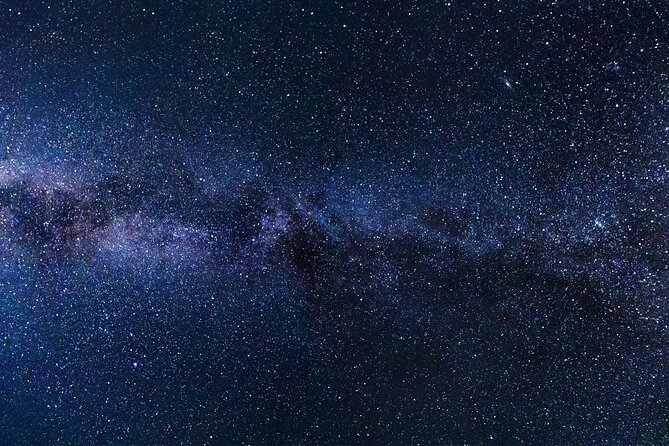
You stay in one place, rather than hopping from viewpoint to viewpoint. That means you can settle in, keep your attention on the sky, and avoid the “long walk, no stars” problem that can happen with some tours.
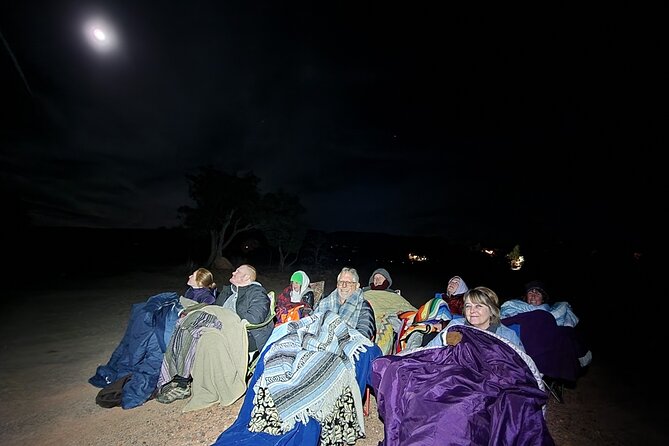
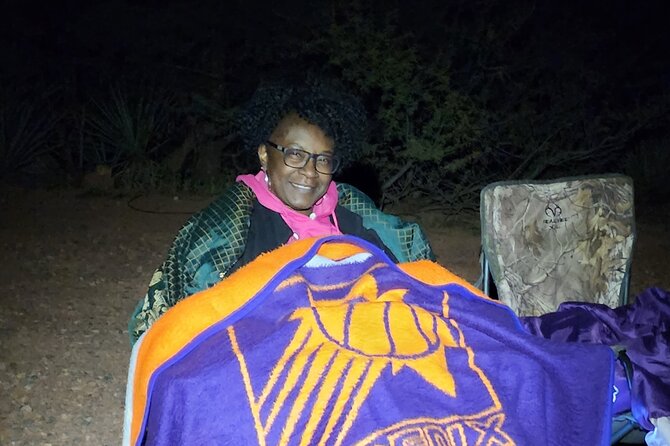
Seating is part of the design: there are chairs, and the comfort kit is practical, not precious. Blankets and hand warmers are provided, and the tour asks you to dress warmly—Sedona nights can be cold, and the sky part of the program is outdoors.
One more practical detail: the tour is English-language and uses a mobile ticket, with confirmation received at the time of booking. If you’re the type who likes to travel light and avoid printing papers, this fits your style.
Stop 1 in Sedona: the sky you can see when the moon cooperates
The tour’s best advantage is that it’s often scheduled with viewing conditions in mind. The tour description specifically calls out no moon during the hours of the tour in its weekly highlight note. In plain terms, that’s when the stars sharpen up and the Milky Way is more likely to pop.
At this first stage, you get set up with the context for the whole night. The guide frames the evening as a mix of:
- mythic constellation stories (Greek and local Indigenous associations),
- big-picture astronomy you can understand without telescopes,
- and a connection to a daytime tour concept (the Experiential And Scientific Vortex Tour).
So even if you’ve never taken any related Sedona tour, you’re not lost. You’re just being given a storyline for how to look up and make sense of what you’re seeing.
If the night is clear, you’ll likely get a show of recognizable targets. The weekly highlight list includes Orion, Sirius, Cassiopeia, Leo, Gemini, Taurus, Pleiades, Jupiter, Saturn, and both Big Dipper and Little Dipper—plus more. Which ones you see depends on the date and the sky’s timing.
Stop 2: how Greek myth and Indigenous sky stories are taught
Constellations aren’t just astronomy. They’re cultural memory—ways people mapped meaning onto the night. That’s exactly how this tour approaches them: as stories you can connect to the star shapes.
The program includes Greek and local Indigenous constellation star stories, and the guide uses visuals to keep the stories tied to what’s above you. The visuals matter because they help you track names while you’re also tracking locations. Without that structure, “learning mythology” can drift away from “learning where to look.”
A real advantage here is that the guide talks about constellations as a living set of ideas, not as trivia flashcards. Several accounts mention that the guide makes the explanations clear and fun, with participation encouraged while he points things out with a laser pointer.
One note for your expectations: this is story-forward. If you want pure astronomy facts with minimal myth, you may find the storytelling heavy. On the flip side, if you like learning culture through the sky, this is the kind of tour that gives you more to think about afterward.
Stop 3: big-picture astronomy built for your naked-eye view
Here’s the heart of the “why” behind the tour: it focuses on big-picture astronomy and what you can see from Earth without equipment. That means you’re learning concepts like perspective, motion across the night, and how our viewpoint shapes what constellations seem to do.
This is where the tools earn their keep. A planisphere helps show how the sky changes with time. The tour also references visuals like a play-doh Milky Way setup and a star-app component to connect the model to real positions.
You’ll also get a sense of how the tour ties the sky to the solar system and galaxy—again, through concepts that don’t require a telescope. Reviews highlight that explanations around the sky’s motion and star orientation are easy to follow, with the guide using humor to keep it moving.
And yes, sometimes the sky adds its own bonus. One account mentions shooting star sightings during the tour. You can’t plan on that every night, but it’s a nice reminder that part of stargazing is letting the sky surprise you.
Stay out for more after-dark experiences in Sedona


Stop 4: staying oriented using playful visuals and real-time pointing
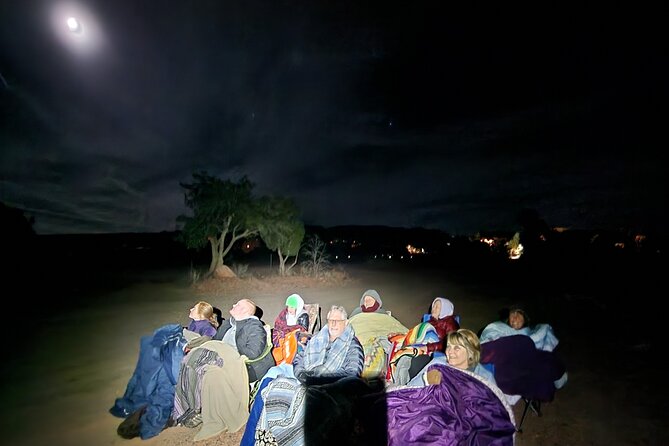
Not all star tours help you get your bearings quickly. This one is designed to. During the program, the guide uses a laser pointer so you’re not guessing which stars he means.
The planisphere and model work together with the pointing. The planisphere helps you understand the sky’s layout, while the laser pointer lets you match the “paper map” to the live sky. That combination is especially helpful if you’re new to constellations or if you’ve only ever seen them as vague lines.
You’ll also notice that the guide’s energy is part of the method. Many accounts describe him as animated and engaging, and that he keeps people involved instead of talking at them the whole time. One review even called out that the laser pointer alone felt worth the price, which makes sense: being able to track constellations as he tells the story is what makes the experience click.
There’s also a link to Sedona’s broader “story” theme. The tour description notes it connects with the daytime vortex tour and that the stars carry some of the history. If you’re doing multiple activities in Sedona, this can feel like a satisfying second act.
What you’re likely to see (and what could change)
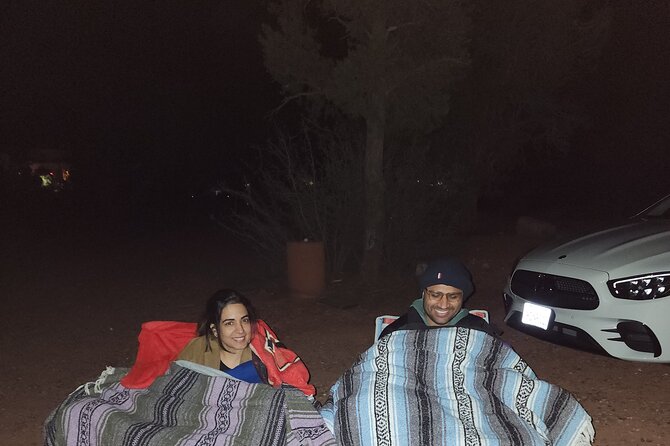
You’re going to look for a mix of stars, recognizable constellations, and a few brighter sky objects. The weekly highlight list is very specific, including:
- Orion and Sirius,
- Cassiopeia,
- Gemini, Taurus, and Leo,
- Pleiades,
- Jupiter and Saturn,
- Big Dipper and Little Dipper.
Your actual lineup depends on the time of year and the exact sky conditions. The tour is set up to help you track what’s relevant that night, not to force the same set of names every time.
Also keep weather in mind. Sedona can be mostly clear at night, and the tour notes clouds are uncommon because the area averages relatively low annual rainfall. Still, clouds can happen, and the guide’s approach includes reassurance that clouds sometimes clear shortly before the tour window.
A key practical detail: if the sky is partly blocked, you may still enjoy the storytelling and learning, but the “wow” factor from star visibility may be reduced. That’s not a flaw in the tour—it’s nature. What you can do is dress for cold and go in ready to learn even if the stars take a minute to show themselves.
Dress for warmth: this is an outdoor show
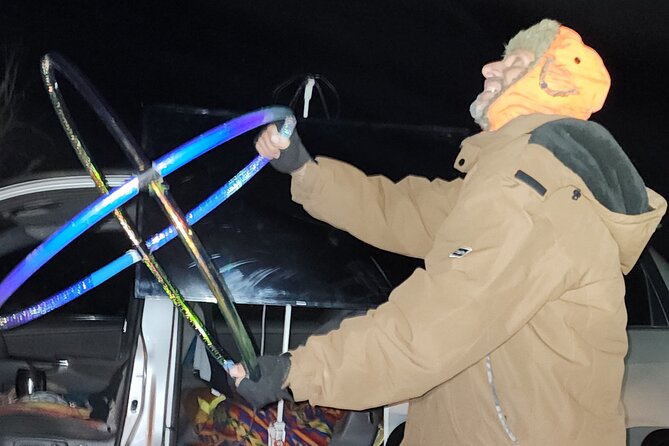
Comfort is not an add-on here. It’s part of the experience. Chairs are provided, plus blankets and hand warmers. Still, you’ll be outside in the evening, so you should dress like you plan to stand still for a while.
From firsthand guidance in the reviews: bring warm layers, and consider gloves and a stocking cap. Northern Arizona can be colder than you expect, and Sedona nights can shift quickly once the sun drops.
My advice is simple:
- Wear layers you can adjust,
- bring a warm hat even if you think you’ll be fine,
- and don’t rely on the hand warmers as your only heat source.
Who this tour is best for
This works especially well if you want to combine astronomy + storytelling. If you like mythology, Indigenous sky associations, and learning how humans mapped the stars, you’ll feel at home here.
It’s also a great pick if you’re traveling with people who want different things:
- one person gets the science concepts (big-picture astronomy),
- another gets culture through constellation myths,
- and everyone gets guided pointing so the sky doesn’t feel like guesswork.
Families can work too. Several reviews mention it’s engaging for small children and that the guide incorporates everyone into the night sky experience.
If, however, you’re the type who wants a quiet photo session, minimal talking, and a strictly “show me the sky” vibe, this may feel too talk-heavy. One review described it as more lecture than hands-on star gazing. That’s your cue to read your own style: do you like learning as part of the fun, or do you want the sky to do all the talking?
Price and value: what $100 buys you in practice
At $100 per person for about two hours, you’re paying for more than access to stars. You’re paying for translation: turning constellations, motion, and cultural sky stories into something you can actually use while you’re standing there looking up.
The best value shows up in three places:
- You get guided orientation (laser pointer + planisphere + model visuals),
- you learn concepts that help you understand the sky without needing a telescope,
- and you get comfort support (chairs, blankets, hand warmers) so you can stay outside long enough for learning to land.
If you’re the “I can learn this on YouTube” traveler, this might feel pricey. But if you want to come out of the experience with names you can place and explanations that make the sky feel logical, the price makes sense.
Also, the small group cap helps. With up to 15, you’re not lost in a crowd, and the guide can point and explain with enough clarity to keep you oriented.
Should you book it? My honest call
Book this tour if you want a warm, guided night in Sedona where you’ll learn constellations, understand basic sky motion, and connect Greek myth and local Indigenous sky stories to the real stars above you. If you like participation, humor, and visuals that make astronomy click fast, you’ll likely have a great night—even if the sky isn’t perfectly clear.
I’d think twice if you want mostly silent stargazing or if you dislike story-heavy presentations. On some nights, cloud cover can also soften the star visibility, though the comfort setup and the teaching are still part of the experience.
If you’re doing Sedona for the views and stories, this is a smart use of an evening.
FAQ
How long is the Night Sky Star Story, Galaxy, and Sedona Story tour?
It runs about 2 hours 5 minutes (approx.).
Where does the tour start and end?
The meeting point is 77 Cultural Park Pl, Sedona, AZ 86336, and the activity ends back at the same meeting point.
What time does it start?
The start time is 7:30 pm.
Is this a telescope tour?
No. The tour focuses on what you can see with your own eyes and does not rely on telescopes.
What language is the tour offered in?
It is offered in English.
What comfort items are provided?
The tour provides chairs, blankets, and hand warmers. You’re also asked to dress warmly.
What should I bring with me?
Dress warmly for a cold night. The tour provides blankets and hand warmers, but warm clothing like gloves and a hat can help.
Are pets allowed?
You should refrain from bringing pets. Service animals are allowed.
What group size should I expect?
There is a maximum of 15 travelers.
What happens if it’s cloudy?
Clouds happen seldom in Sedona at night. If it’s cloudy the night of your tour, you have the option to cancel for a full refund based on your discretion, even if you’re inside the 24-hour cancellation window. If the tour is canceled due to poor weather, you’ll be offered a different date or a full refund.
Is mobile ticketing used?
Yes, the tour uses a mobile ticket.
More Tours worth a look around Sedona




More Stargazing & Night-Sky Tours over Sedona

More Tour Reviews worth a look around Sedona
Not quite your trip? Here is more to see and do around Sedona





Stargazing & Astronomy Nights, compared.
 ★ 4.5Sedona Stargazing Tours LLCFrom $89881 reviews
 ★ 4.5The Original Sedona UFO and Stargazing Night TourFrom $155269 reviews
 ★ 4.4Nighttime UFO & Stargazing TourFrom $160148 reviews
 ★ 5.0Sedona Dark Sky Sunset & Night Hike With a Private GuideFrom $18586 reviews
 ★ 4.5Sedona UFO/Stargazing Tour (price per goggle not per person)From $16047 reviews
 ★ 5.0Stargazing Tour with Telescopes and Video Astronomy in SedonaFrom $12540 reviews
 ★ 4.5Page: Antelope Valley Canyon Stargazing Night HikeFrom $6537 reviews
 ★ 5.0Sedona Full Moon MeditationFrom $13016 reviews
Browse the lists this tour appears in