
Reviewed · STARGAZING & ASTRONOMY NIGHTS
Sedona Stargazing Tours LLC
Sedona’s stars feel close enough to touch. This private night tour outside Oak Creek pairs GPS-guided telescopes with a laser-pointer constellation warm-up, so you’re not just looking up—you’re learning your way around the sky. The main thing to factor in is that moonlight and clouds can limit how many faint objects you’ll be able to see.
You’ll meet at 3511 Verde Valley School Rd and then settle in for an astronomer-led show that’s truly adjustable to what you want to hunt for. Expect lots of time at the big scopes (take turns), plus breaks with wide-view binoculars and a comfortable chair—handy when the air cools fast.
In This Review
- Key Things I’d Do First (Before You Book)
- Oak Creek Sky Time: Why This Tour Feels Different
- The 3511 Verde Valley School Rd Start: Getting Where You Need to Be
- The 1-Hour Flow: Laser Pointers, Telescope Turns, and Binocular Breaks
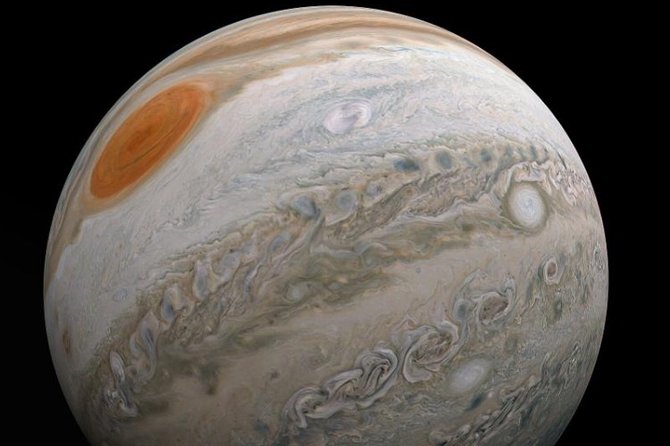
- What You Can See: Planets, Moon Features, Galaxies, and Nebulas
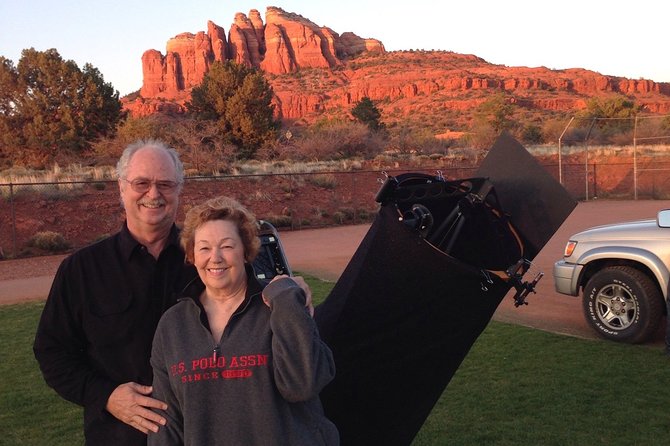
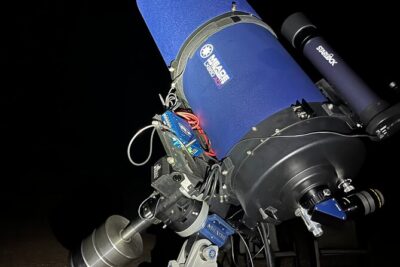
- Telescopes That Actually Help: GPS Positioning and Big-Lens Reality
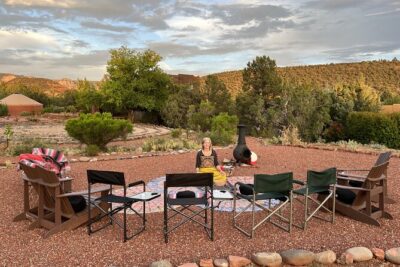
- Comfort Setup: Chairs, Binoculars, and Staying Warm
- Private and Customizable: A Better Fit for Couples, Families, and Star Nerds
- Price and Value: Is $89 for 1 Hour 15 Minutes Fair?
- Weather Reality Check: Clouds and Full Moon Affect What You’ll See
- Who Should Book This Tour (and Who Might Pass)
- Should You Book Sedona Stargazing Tours LLC?
- FAQ
- How long is the Sedona stargazing tour?
- How much does it cost per person?
- Is this tour private?
- Where do I meet the tour?
- What language is the tour offered in?
- Will I get a ticket that works on my phone?
- What can I see during the telescopes?
- Do I have time to rest and look without the telescope?
- What happens if the weather is bad?
Key Things I’d Do First (Before You Book)
- Go for a moon-aware date: full moon can brighten the sky and wash out the faint stuff.
- Dress for real nighttime cold: bring layers; during winter, blankets and even parkas have been provided.
- Plan on hands-on telescope time: the tour is built around turn-taking at large, powerful scopes.
- Ask for specific targets: you can customize what you want to see during the 1-hour experience.
- Use the laser pointer to get your bearings: it speeds up the learning curve fast.
Oak Creek Sky Time: Why This Tour Feels Different

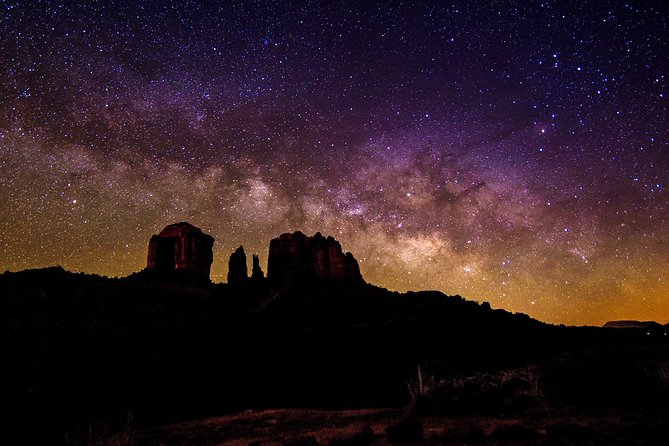
Stargazing in Sedona isn’t just about pretty darkness. The experience is designed to make you orient yourself quickly, then actually connect that map in your head to what the telescope shows you in real time. That’s a big deal for first-timers who worry they’ll spend the whole night guessing.
The tour’s rhythm does two things well. First, you get guided constellation context using a laser pointer, which helps you track where objects live in the sky. Second, when it’s time for the telescopes, the scope setup uses GPS auto positioning, which keeps the night from turning into a frustrating trial-and-error search.
It also helps that the viewing area is set up for comfort. You’re not standing around for long stretches. You’ll get a chair, wide-view binoculars for a broader look between telescope turns, and time to ask questions without feeling rushed.
Look up at more stargazing and night-sky tours over Sedona
The 3511 Verde Valley School Rd Start: Getting Where You Need to Be
You’ll begin at 3511 Verde Valley School Rd, Sedona, AZ 86351. That’s your anchor point, and from there the night shifts into observation mode at the designated time.
A couple practical notes that matter here:
- Your timing is tied to sky conditions. The tour updates start/check-in information around sunset and viewing conditions, so don’t treat the first printed time as the only word.
- Bring your phone for the mobile ticket. You’ll have a ticket/pass accessible digitally, plus you’ll receive email information after booking with the address and departure details.
This matters because stargazing is time-sensitive. If you arrive late, you miss the early constellation orientation and the best window to get the scopes dialed in.
The 1-Hour Flow: Laser Pointers, Telescope Turns, and Binocular Breaks
This is where the tour earns its keep. The structure is simple, but it’s built for learning and visibility.
1) Constellation overview with a laser pointer
You’ll start with an orientation session. The laser pointer helps you match the shapes you’re seeing to what the guide is describing—constellations, positions, and even zodiac names. If you’ve ever felt lost under the stars, this part helps you stop feeling like you’re just guessing.
2) Take turns at large, powerful telescopes
Next comes the main event: telescope time. The scopes use GPS auto position, which reduces the “find it first” struggle and lets you spend more of the night actually viewing. You’ll typically cycle so everyone gets a look.
3) Wide-view binocular time while you rest
Between telescope turns, you’ll switch to binocular viewing with a wide field of view. This is a smart break. It keeps your eyes from getting too tired between long looks through glass, and it also lets you see the sky as a whole, not just one magnified target.
4) Questions and customization throughout
The tour is explicitly private and customizable. If you want planets, a specific constellation, or to spend more time on what’s visible that night, you can ask. This turns a standard “look at Saturn and move on” experience into something more personal.
What You Can See: Planets, Moon Features, Galaxies, and Nebulas
The sky doesn’t show everything every night. Still, the tour is set up for a strong hit list, depending on conditions.
Based on the tour description, your telescope viewing can include:
- Planets
- Stars
- Distant galaxies
- Nebulas
- Star clusters
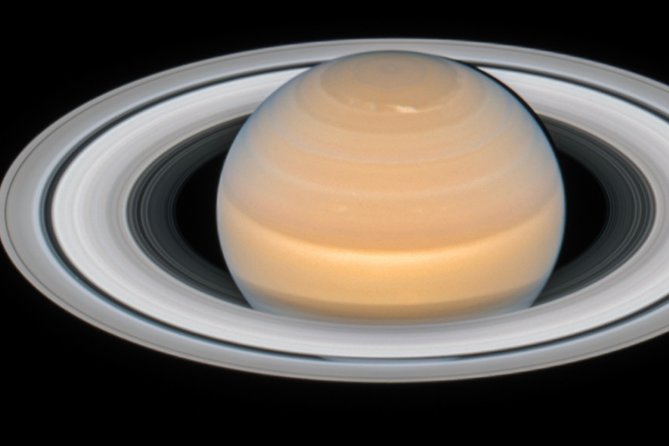
And the reviews back up that this isn’t just talk. Saturn is repeatedly called out as a highlight. One guide experience specifically notes seeing Saturn’s rings and its moon with clear detail through the telescope, which is exactly the kind of target you hope for on a first Sedona stargazing trip. The Moon also comes up often, especially for nights when its brightness is high.
One more helpful way to think about it: when you’re at a telescope, you’re trading “wide sky” for “sharp detail.” The binocular breaks keep you from losing the larger picture, so you still feel like you’re learning the sky—not only chasing one object.
Telescopes That Actually Help: GPS Positioning and Big-Lens Reality
Let’s be honest: many stargazing activities boil down to “here’s a telescope, good luck.” This one is built to reduce that problem.
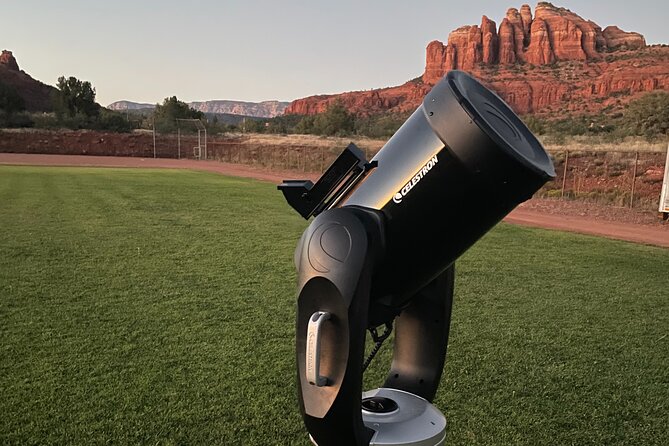
The telescopes are described as large and powerful, and the GPS auto position feature matters because it speeds up alignment. That means:
- You spend less time hunting.
- You get more time viewing.
- Everyone in the group has a better chance of seeing the target clearly.
You’ll also feel the difference in the way it’s hosted. Some guide styles get praised for turning constellations into stories. Names that show up in the experience include Wes and Dave for storytelling and clear guidance, and Richard is noted for standout guiding (plus someone even extended the time for more sky and a dinner together).
Even if you don’t memorize star names, GPS-assisted targeting plus guided pointers can make the night feel far more successful.



Comfort Setup: Chairs, Binoculars, and Staying Warm
Night air in Sedona can get cold fast, especially outside warmer months. The tour setup takes that seriously.
You’ll have:
- A comfortable chair
- Wide-view binoculars for breaks between telescopes
In winter conditions, reviews mention that the team provides blankets and parkas, and one family specifically calls out that layers help but warmth gear was available. So while you should still dress for cold weather, you won’t be totally left on your own.
Practical tip: wear warm socks and a hat. Your hands will thank you. If you’re prone to cold feet, you’ll want real traction shoes (you might be walking a bit near the viewing area).
Private and Customizable: A Better Fit for Couples, Families, and Star Nerds
Because it’s private, the experience doesn’t have to stick to a single pace. You’re not competing with strangers for telescope turns or hoping the guide’s plan matches what you care about.
This works well if:
- You’re a couple who wants an unhurried pace and time for questions.
- You’re traveling with kids and want short, engaging explanation tied to what they can see in front of them.
- You’re a solo traveler who doesn’t want to sit silently while others do the asking.
One theme in the experience is that kids can handle it when it’s structured. The combination of laser-guided constellation orientation and hands-on telescope viewing gives children something concrete to react to, not only vague “look up” instructions.
Price and Value: Is $89 for 1 Hour 15 Minutes Fair?
At $89 per person for about 1 hour 15 minutes, you’re paying for more than access to a telescope. You’re buying a guided session built around equipment and a professional astronomer-led format.
Where that price feels reasonable:
- GPS-assisted telescope time keeps the night from feeling wasted.
- You get structured learning (laser pointer + constellation orientation).
- You receive binoculars for broad-sky viewing plus a comfortable chair and time to ask questions.
Where you should manage expectations:
- The sky is not a controlled environment. If the Moon is bright or clouds roll in, faint targets can be harder to see, and the experience can feel less “wow” even if the guide is doing everything right.
So the value is best if you treat it like an astronomy experience, not a guarantee of the faintest objects every single night.
Weather Reality Check: Clouds and Full Moon Affect What You’ll See
Stargazing is weather math. This tour requires good weather, and cancellations can happen if the stars aren’t visible well enough for the quality the experience aims to provide.
Two conditions can especially change what you can see:
- Full or near-full moon: it brightens the sky and reduces contrast for faint galaxies and nebulas.
- Cloud cover: even partial clouds can scatter light and block views.
Some reviews mention still seeing plenty even with a strong moon, while others feel the cost didn’t match their expectations when conditions were tougher. My practical advice: pick a night when you’ll be flexible and enjoy the learning even if the sky is brighter than ideal.
If you’re aiming for the darkest, starriest view, consider scheduling around a darker moon phase.
Who Should Book This Tour (and Who Might Pass)
This is a great match if you want:
- A guided stargazing experience with real telescope viewing time
- A fast way to learn constellations using laser pointing
- Comfort plus binocular breaks (so you’re not frozen and frustrated)
I’d also say it’s a good choice for first-timers in Sedona who want one high-impact night activity that’s easy to understand—planets, the Moon, constellations, and the big sights.
You might hesitate if:
- You’re only interested in faint deep-sky objects and you’re set on a perfect sky no matter what.
- Cold nights are a dealbreaker for you (even with blankets and parkas, you’ll still want to dress appropriately).
Should You Book Sedona Stargazing Tours LLC?
If you’re in Sedona and you want a night activity that teaches as it goes, I’d book this. The mix of laser-guided orientation, GPS-assisted telescope viewing, and comfortable breaks is exactly what makes stargazing click.
Choose wisely, though. Bring warm layers, check for updated timing tied to sunset and moon conditions, and go in with the mindset that the sky is the star—and you’re there to learn it, not just hunt one guaranteed target.
If that sounds like your kind of night, this tour is a strong use of your time in the red rock country.
FAQ
How long is the Sedona stargazing tour?
The tour is about 1 hour 15 minutes.
How much does it cost per person?
The price is $89.00 per person.
Is this tour private?
Yes. It’s described as a private tour/activity, with only your group participating.
Where do I meet the tour?
The meeting point is 3511 Verde Valley School Rd, Sedona, AZ 86351, USA.
What language is the tour offered in?
The tour is offered in English.
Will I get a ticket that works on my phone?
Yes. The tour includes a mobile ticket, and you’ll also receive information by email after booking.
What can I see during the telescopes?
You can view planets, stars, distant galaxies, nebulas, and star clusters (depending on viewing conditions). The Moon is also mentioned as a common target.
Do I have time to rest and look without the telescope?
Yes. Between telescope turns, you can use provided wide-view binoculars and rest in a comfortable chair.
What happens if the weather is bad?
This experience requires good weather. If it’s canceled due to poor weather, you’ll be offered a different date or a full refund.
More Tours worth a look around Sedona
More Stargazing & Night-Sky Tours over Sedona


More Tour Reviews worth a look around Sedona
Not quite your trip? Here is more to see and do around Sedona

Stargazing & Astronomy Nights, compared.
 ★ 4.5The Original Sedona UFO and Stargazing Night TourFrom $155269 reviews
 ★ 4.5The Night Sky Star Story, Galaxy, and Sedona Story TourFrom $100243 reviews
 ★ 4.4Nighttime UFO & Stargazing TourFrom $160148 reviews
 ★ 5.0Sedona Dark Sky Sunset & Night Hike With a Private GuideFrom $18586 reviews
 ★ 4.5Sedona UFO/Stargazing Tour (price per goggle not per person)From $16047 reviews
 ★ 5.0Stargazing Tour with Telescopes and Video Astronomy in SedonaFrom $12540 reviews
 ★ 4.5Page: Antelope Valley Canyon Stargazing Night HikeFrom $6537 reviews
 ★ 5.0Sedona Full Moon MeditationFrom $13016 reviews
Browse the lists this tour appears in