
Reviewed · STARGAZING & ASTRONOMY NIGHTS
Sedona Night Hike and Stargazing Tour
A desert night turns the familiar strange. This Sedona hike mixes stargazing with UV scorpion scouting after dark.
I like that it’s paced for real conditions, not just a photo stop. I also like that the guides are Wilderness First Responders, so the dark hike feels well run. One drawback to consider: you’ll want to be comfortable hiking on uneven trail in the night, because this is not a flat walk.
Key Points You’ll Care About
- Doe Mountain hike in the dark: about 3 hours on trail, starting at sunset and continuing after the stars come out.
- Stargazing built into the route: your guide points out constellations and planets with a laser.
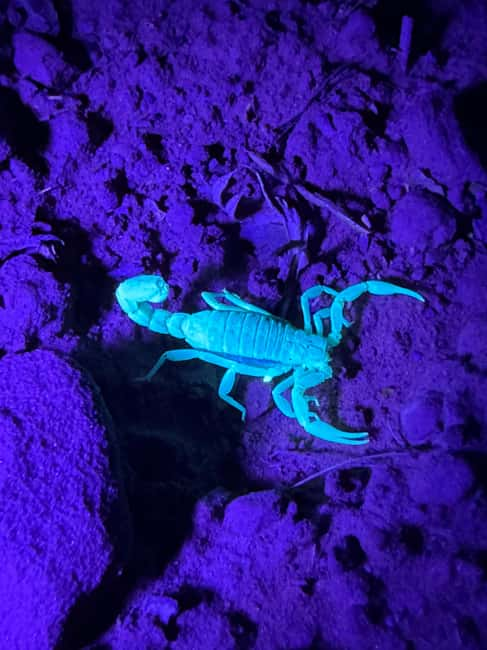
- UV flashlight scorpion scouting: watch for glowing scorpions in cracks and under rocks using ultraviolet light.
- Quiet trail choice: the route is selected based on season, current tourism levels, and moon/constellation alignment.
- Safety first: all guides are certified WFR and skilled in orienteering for nighttime navigation.
- Small, focused experience with snacks: you’ll get snacks plus pickup and drop-off from a set meeting spot.
In This Review
- Doe Mountain at dusk: how this 4-hour night hike works
- Van pickup and trail selection: why you won’t feel rushed
- The sunset hike: red rocks in fading light
- Stargazing with a laser: seeing constellations without squinting
- UV flashlight scorpion scouting: the desert’s hidden show
- Safety in the dark: WFR certification and orienteering
- What’s included, and what you need to bring
- Price and value: $495 per group up to 1
- Who should book this Sedona night hike
- Should you book it?
- FAQ
- How long is the Sedona Night Hike and Stargazing Tour?
- Where do we meet for the tour?
- Is transportation included?
- What activities are included during the hike?
- What should I bring?
- Who is the tour suitable for?
- What are the cancellation rules and booking options?
Doe Mountain at dusk: how this 4-hour night hike works
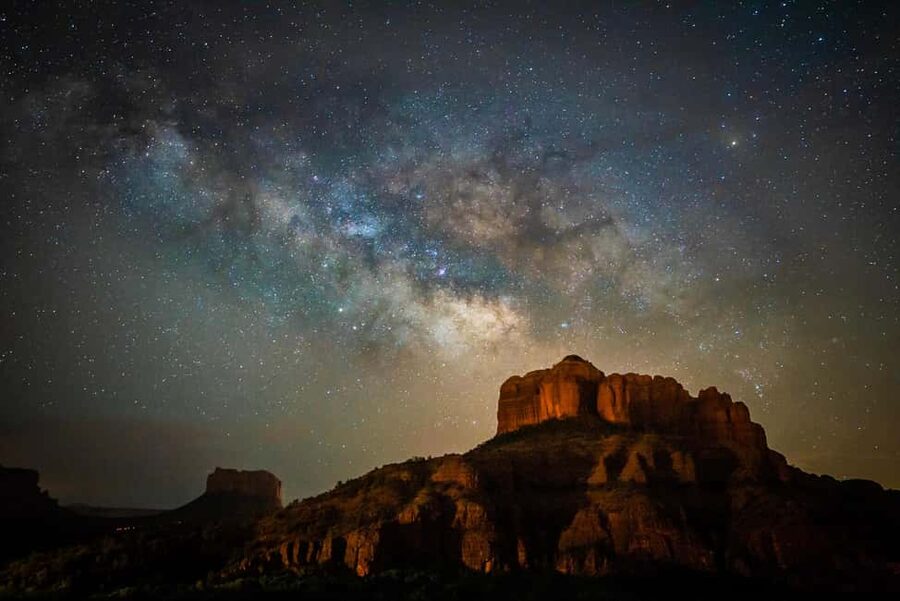
Sedona at night has its own rhythm. The tour starts just before sunset, then keeps going as the sky flips from fading pink to proper black. That timeline matters, because you get two different kinds of Sedona in one outing: glowing red-rock views first, and brighter stars after the trail grows darker.
You’re out for about 4 hours total. The core hike runs around 3 hours, with stops for stargazing and wildlife sign spotting. The group stays small/private, which helps the whole evening feel calm instead of chaotic.
The plan is simple: hike up, pause for the sky, then keep exploring deeper into the night on a quieter stretch. Along the way, you’ll hear what to watch for, both in the sky and on the ground. If you’re the type who gets nervous in the dark, this tour is built to reduce that stress by keeping things structured and guided.
Van pickup and trail selection: why you won’t feel rushed
You meet at the Southwest corner of the Whole Foods Market parking lot. Then you ride in a van for about 15 minutes to reach the trail area. That short transfer is a big deal in practical terms: you don’t spend your whole evening driving, parking, and figuring out where to stand in the dark.
Here’s another factor you might not expect: the route isn’t just one fixed loop. The guide chooses the trail based on season, current tourism levels, and moon and constellation alignment. Translation: you’re not guaranteed the exact same sky show every night, but the guiding team tries to pick conditions that make stargazing and quiet hiking easier.
Because the tour is set up around timing, it also helps the pace. You’re not sprinting between photo ops. You’re walking, cooling down as it gets dark, then settling into the kind of stillness you usually only notice after crowds thin out.
Look up at more stargazing and night-sky tours over Sedona

The sunset hike: red rocks in fading light
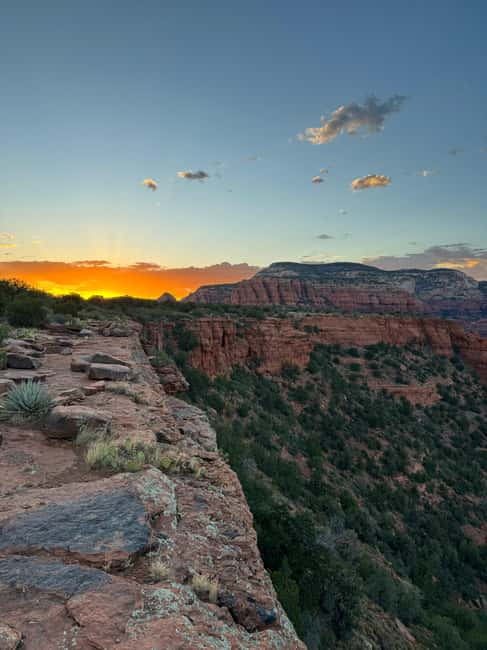
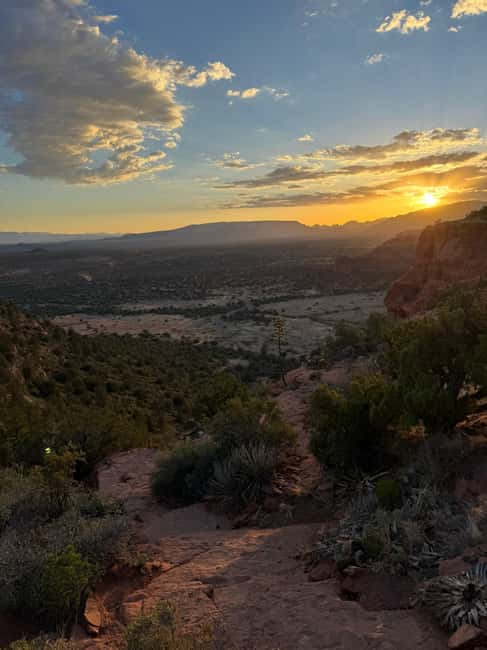
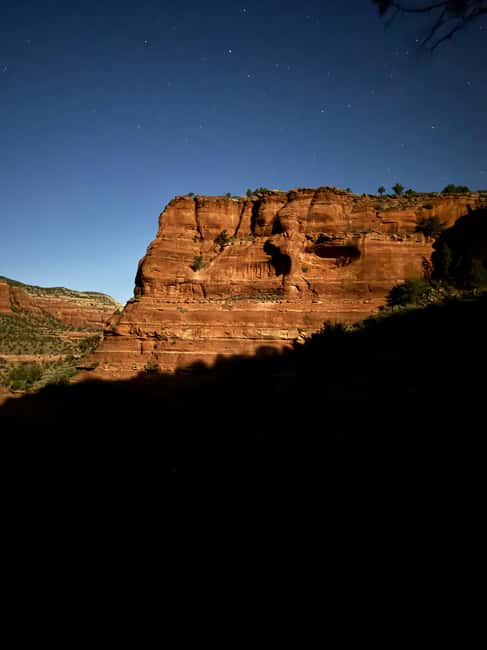
The beginning is your “warm-up.” As you hike toward a scenic vista, you’re catching Sedona’s red rock look while the light is still soft. This is when the terrain is easier to read, and you can get comfortable with the trail before you’re fully under darkness.
You’ll be on a route up Doe Mountain. Even if you’ve hiked Sedona in daylight, night changes everything—your depth perception, your footing, and how fast you get tired. Starting at sunset helps with that. It gives you an easy on-ramp before the stars get involved.
On this first section, the best mindset is to enjoy the “between moments.” You’ll be watching how the desert cools and how colors change. You’re also listening for what your guide points out—wildlife habits, survival strategies, and how desert life shifts after dark. It’s part adventure, part science, part plain old wonder.
Stargazing with a laser: seeing constellations without squinting
Once it’s properly dark, the tour slows down for stargazing. Your guide identifies constellations and planets and uses a laser to help you connect what you see in the sky with what you learn.
This is where the “guided” part earns its keep. Looking up on your own is fun, but it’s also easy to feel lost. A laser pointer (used responsibly) turns the sky into a map you can actually follow. You spend less time guessing and more time learning what you’re seeing.
Sedona’s night sky is a big part of the appeal, and this tour leans into it by choosing a route where light pollution is lower. That usually means more stars stand out, and the overall sky feels darker and deeper than you’ll get in brighter areas.
The guide also shares astronomy highlights as you pause. It’s not just naming objects. It’s tying them into the bigger story of the seasons and the night sky you’re standing inside.
Practical tip: bring your camera if you like night shots. The tour recommends a camera, and honestly, this is one of the better reasons to bring it.
UV flashlight scorpion scouting: the desert’s hidden show
Then comes the moment most people talk about: UV flashlight scorpion scouting.
Using ultraviolet light, scorpions can appear with a vivid glow—often a blue-green color—so they become visible where they normally blend into the desert night. You’re essentially switching from regular “look and hope” to a targeted search method. That turns a spooky-sounding topic into a fascinating, observational experience.
This part is also paced as something you can do without panicking. Your guide leads the search along the trail, and you’re looking at signs like cracks, under rocks, and other places scorpions might hide. The goal is to view them in a way that doesn’t mess with their natural behavior.
One more thing: the desert can surprise you. Even on a well-run hike, you’re still in wild habitat. You might spot other nocturnal wildlife activity too—signs that owls, bats, and other night creatures are around. The tour is designed around that reality, not around pretending the desert is empty once the sun goes down.
If you’re worried about seeing something you don’t want to see (like a snake), it helps to remember the guide’s role. This is their job, and the point is to keep you calm, steady, and aware.
Safety in the dark: WFR certification and orienteering
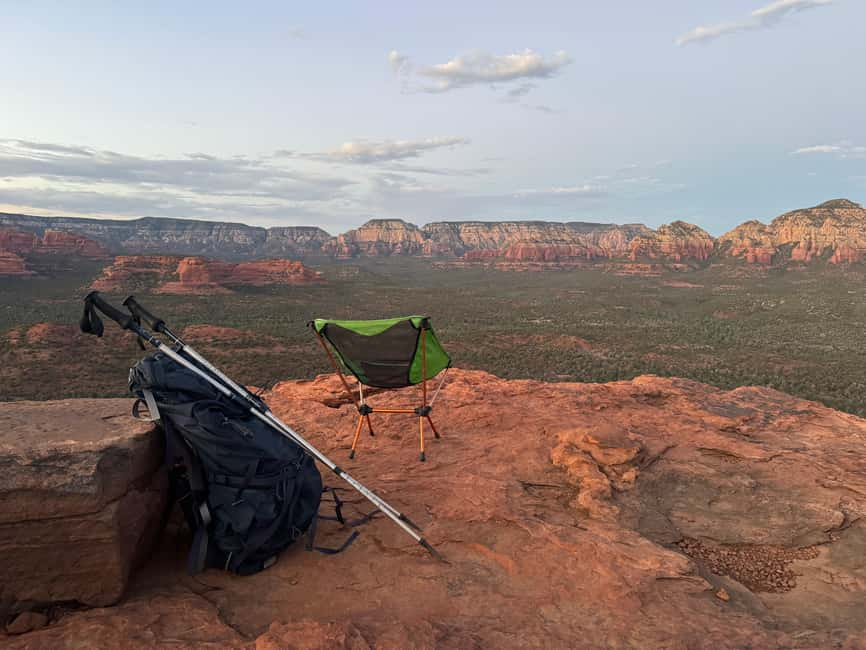
Night hiking has a single rule: you want competence. Here, the tour leans hard on safety training.
Your guides are certified Wilderness First Responders (WFR). That matters because accidents happen more often in remote settings when people slip, twist an ankle, or get too tired to think clearly. The tour is built around the idea that your guide can respond quickly and appropriately if anything goes wrong.
They’re also skilled in orienteering, which is the practical backbone of nighttime travel. You’re not wandering around in the dark hoping the trail reappears. You’re following a guide who can navigate and keep the group on track.
What I like about this setup is that it turns nighttime hiking from a bravery test into a managed experience. You still need basic common sense, of course, but the tour doesn’t treat safety as an afterthought.
In the end, the best night hike is one where you can look up at the stars without constantly checking over your shoulder.
Stay out for more after-dark experiences in Sedona


What’s included, and what you need to bring
The tour includes a lot of the “hard-to-plan” pieces:
- Expert local guide
- Small group experience
- Transportation by van plus pickup/drop-off
- Guided hike up Doe Mountain
- Stargazing
- Scorpion scouting
- Snacks
What’s not included is simple: optional gratuity.
As for what you should bring, the essentials are:
- Comfortable shoes (non-negotiable on rocky terrain)
- Hat
- Camera (recommended)
- Water
Also think about layers. The desert can cool fast after sunset, and even if you start warm, you’ll likely feel colder once you’re higher up and walking slower during stargazing pauses.
Price and value: $495 per group up to 1
At $495 per group up to 1, this isn’t a bargain-basement activity. It’s priced like a private, guide-led experience with transportation, safety staffing, and equipment built around night conditions.
So the value depends on how you travel:
- If you’re going solo, you’re paying for the entire guided/private structure yourself, and that can feel steep.
- If you can share the trip as a small group in practice (if your booking setup allows it), the cost can feel more reasonable because you’re splitting the “guide time + van + snacks + scouting equipment” cost.
Either way, the price isn’t just for walking. You’re paying for:
- navigation and safety expertise in low light
- guided stargazing with a laser
- UV flashlight scorpion scouting (plus the know-how to do it well)
- selecting quieter trail conditions based on moon and tourism
If those things matter to you—and they probably do if you’re considering a night hike—this tour makes sense.
Who should book this Sedona night hike
This experience is a strong fit if you want more than a walk and a quick star photo. You’ll enjoy it most if you like guided learning, hands-on nature viewing, and an evening plan that feels intentional.
You’ll likely be happiest if you:
- enjoy the outdoors and can hike on uneven trail at night
- want stargazing support (constellations and planets, not just vibes)
- are curious about desert wildlife and the unusual behaviors of scorpions after dark
- like a structured experience rather than improvising in the dark
It’s not suitable for babies under 1 year and people over 95 years, based on the operator’s guidelines.
One more comfort check: you’ll want to feel okay with nighttime hiking. Even with a WFR guide and orienteering, this is still a hike, not a stroller-friendly stroll.
Should you book it?
Book this tour if you want a real Sedona night, with a guide who can handle both the sky and the desert floor safely. The combination of WFR-certified guidance, stargazing with a laser, and UV scorpion scouting is the kind of pairing that’s hard to recreate on your own—especially if you don’t want to figure out navigation and timing in the dark.
Skip it if you’re extremely sensitive to uneven footing, darkness, or you’re looking for a very light, easy walk. Also, if your timing is tight, note that spots fill up fast, so it’s smart to plan early.
If you’re curious and you want the night to feel well-managed, this is a solid choice.
FAQ
How long is the Sedona Night Hike and Stargazing Tour?
The tour lasts about 4 hours total.
Where do we meet for the tour?
You meet in the Southwest corner of the Whole Foods Market parking lot.
Is transportation included?
Yes. The tour includes van transportation, including pickup and drop-off at the designated location.
What activities are included during the hike?
You’ll hike with a guide on Doe Mountain, go stargazing, and do scorpion scouting using UV flashlights.
What should I bring?
Bring comfortable shoes, a hat, a camera (recommended), and water.
Who is the tour suitable for?
The tour is not suitable for babies under 1 year or people over 95 years.
What are the cancellation rules and booking options?
You can cancel up to 24 hours in advance for a full refund, and you can reserve now and pay later.
More Tours worth a look around Sedona


More Stargazing & Night-Sky Tours over Sedona

More Tour Reviews worth a look around Sedona
Not quite your trip? Here is more to see and do around Sedona


Stargazing & Astronomy Nights, compared.
 ★ 4.5Sedona Stargazing Tours LLCFrom $89881 reviews
 ★ 4.5The Original Sedona UFO and Stargazing Night TourFrom $155269 reviews
 ★ 4.5The Night Sky Star Story, Galaxy, and Sedona Story TourFrom $100243 reviews
 ★ 4.4Nighttime UFO & Stargazing TourFrom $160148 reviews
 ★ 5.0Sedona Dark Sky Sunset & Night Hike With a Private GuideFrom $18586 reviews
 ★ 4.5Sedona UFO/Stargazing Tour (price per goggle not per person)From $16047 reviews
 ★ 5.0Stargazing Tour with Telescopes and Video Astronomy in SedonaFrom $12540 reviews
 ★ 4.5Page: Antelope Valley Canyon Stargazing Night HikeFrom $6537 reviews
Browse the lists this tour appears in