
Reviewed · STARGAZING & ASTRONOMY NIGHTS
Sedona: Stargazing Tour with Telescopes and Video Astronomy
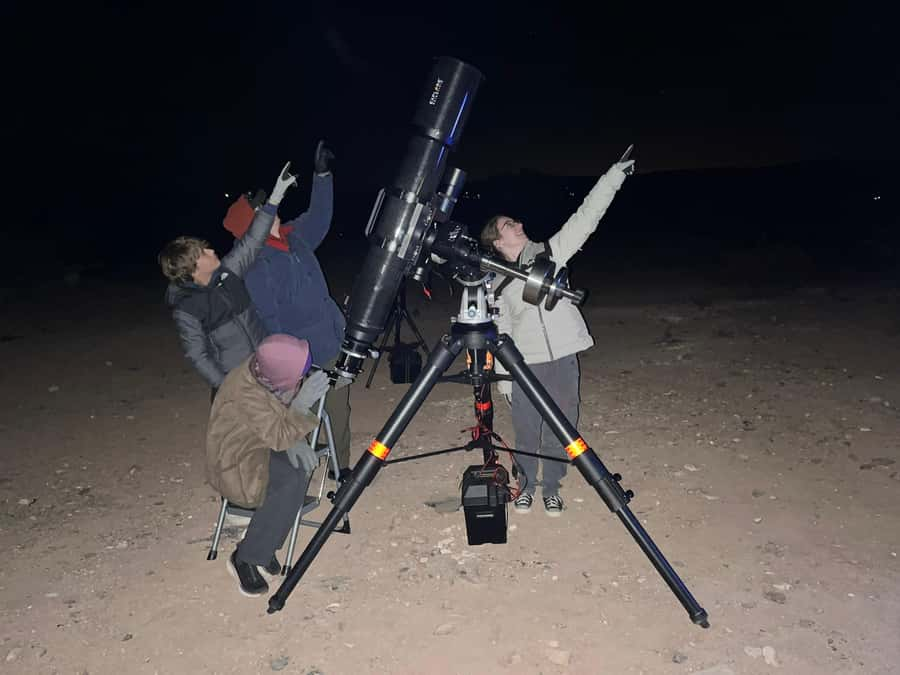
Sedona’s night sky feels unreal. This 90-minute tour pairs big telescopes with 4K video astronomy so you can see far more than just pinprick stars. You start with constellations traced in the dark, then switch to live telescope imaging that makes galaxies and nebulae pop on a screen.
What I like most is how the tour teaches you the sky while also showing it off. You get a guided constellation walkthrough that includes planets and the Milky Way, and then the electronically assisted astronomy (EAA) setup helps you view faint objects that are hard to spot with your eyes alone. If your guide is Chris, you’ll also enjoy how casually he connects the science to the stories behind the sky.
One thing to think about first: this is an outdoor night experience that depends on clear conditions, and you’re responsible for your ride since transportation isn’t included. Also, the terrain is uneven at night, so it’s not a fit if you have mobility limits.
In This Review
- Key highlights I’d plan around
- Entering The Dark Sky Zone Near Uptown Sedona
- The 90-Minute Flow: Constellations First, Then Telescope Time
- Constellations With Stories, Not Just Star Names
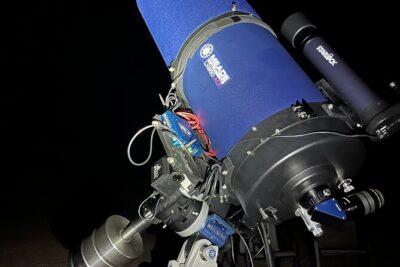
- Big Telescopes Plus EAA on a 4K OLED Screen
- What You Might See: Moon, Saturn, Nebulae, and More
- Comfort on a Cold Night: Blankets, Chairs, and What to Wear
- Getting There: Transportation Is on You, and Timing Counts
- Weather Rules: Why Clear Skies Are Non-Negotiable
- Who This Works For (And Who Should Skip)
- Price and Value: What $125 Buys You in Real Terms
- Quick FAQ for Your Planning
- FAQ
- Where do we meet for the Sedona stargazing tour?
- Is transportation to the dark sky site included?
- How long is the tour, and what language is it in?
- What should I bring for a night sky experience in Sedona?
- What happens if the weather is cloudy?
- Is the tour suitable for young children or mobility limits?
- Should you book this Sedona Stargazing Tour?
Key highlights I’d plan around
- Constellation stories with a laser so you can actually follow what you’re seeing
- 4K OLED screen showing live feeds from sensitive astronomy cameras
- Visual + video viewing (eyepieces for bright targets, cameras for faint deep-sky objects)
- Dark-sky locations near Uptown Sedona on protected forest lands under a USFS permit
- Blankets and padded chairs to make a cold night feel manageable
Entering The Dark Sky Zone Near Uptown Sedona
This tour is built around a simple goal: get you away from city light and into a darker sky where astronomy becomes real. Your meeting spot is a dark-sky site within about a half-hour drive of Uptown Sedona, and the exact location can change with the seasons because the operator has access under a USFS permit.
That matters more than it sounds. In Sedona, your view can swing dramatically depending on where you are standing and how the night is behaving. By keeping the sites on protected forest lands, the experience aims for the kind of darkness that makes constellations easier to recognize and deep-sky objects more likely to show up.
You also won’t show up to a vague “somewhere outside town” situation. After you book, you get specific meetup directions for the site they can access during your time of year.
Look up at more stargazing and night-sky tours over Sedona
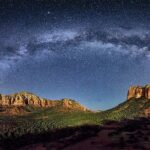
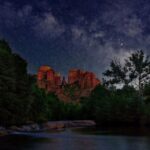
The 90-Minute Flow: Constellations First, Then Telescope Time
The pacing works well because it gets you oriented before you crank up the tech. You begin with a guided constellation tour, with your astronomer tracing star patterns using a laser while sharing the mythic names and stories behind each grouping. This is the part that makes the rest of the night click, because you’re not just staring upward—you’re learning how the patterns connect.
During the constellation portion, the guide also points out what you might catch in the real sky, including:
- visible planets when they’re up
- the Milky Way, when conditions allow
- meteors
- passing artificial satellites
Then, you shift into the telescope phase. This is when the tour’s “two modes” really matters: you’ll spend part of the time using premium eyepieces for visual viewing, then switch to a video setup for objects that are too faint for the human eye to pull out clearly.
Constellations With Stories, Not Just Star Names
I like constellation tours that respect your attention span. Here, the laser tracing keeps you from wandering around the sky trying to figure out where the guide means. When you hear the names and stories, you start building a mental map that lasts past the night.
This is also one of the easiest ways to feel successful fast, even if you’ve never done astronomy before. You learn the sky basics in a structured way, instead of relying on a star chart app while your neck freezes and you lose your place.
If you’re the type who likes details, the guide also connects the dots to what came before—historical context around astronomy and the people who figured out how to look at the universe.
Big Telescopes Plus EAA on a 4K OLED Screen
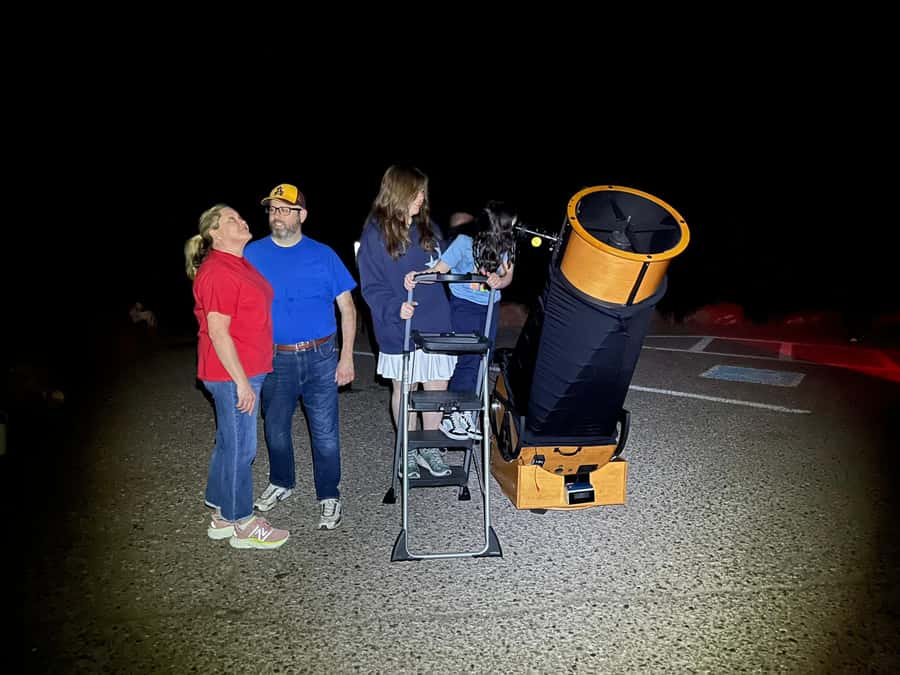
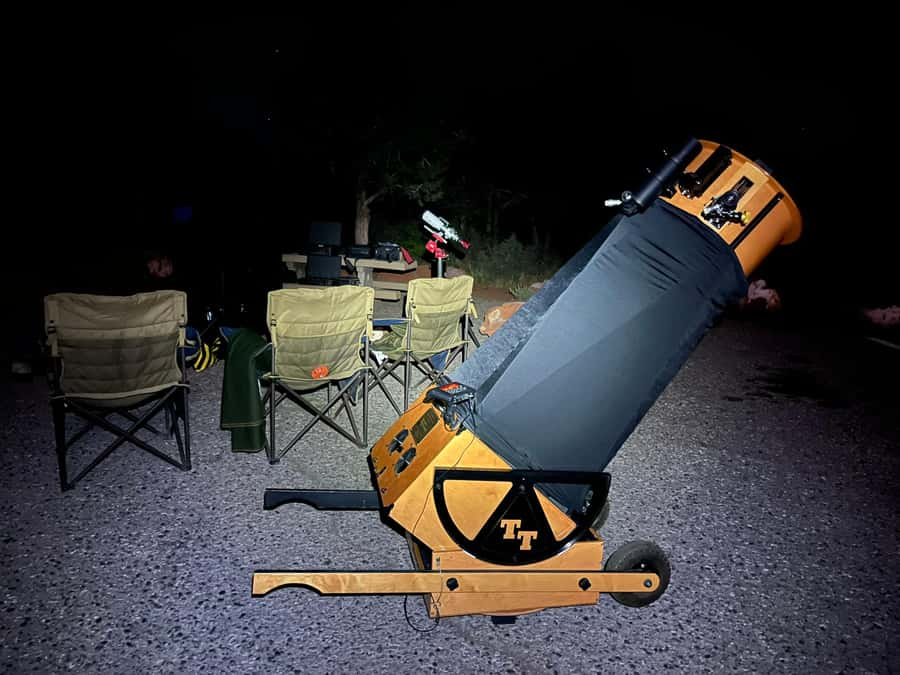
Here’s where this tour earns its reputation. You’ll use custom, premium large aperture telescopes, but you won’t be limited to what your eyes can catch.
For brighter targets, you use high-quality astronomy eyepieces on the visual telescopes. This part is great for:
- the Moon
- planets
- double stars
- brighter deep-sky objects
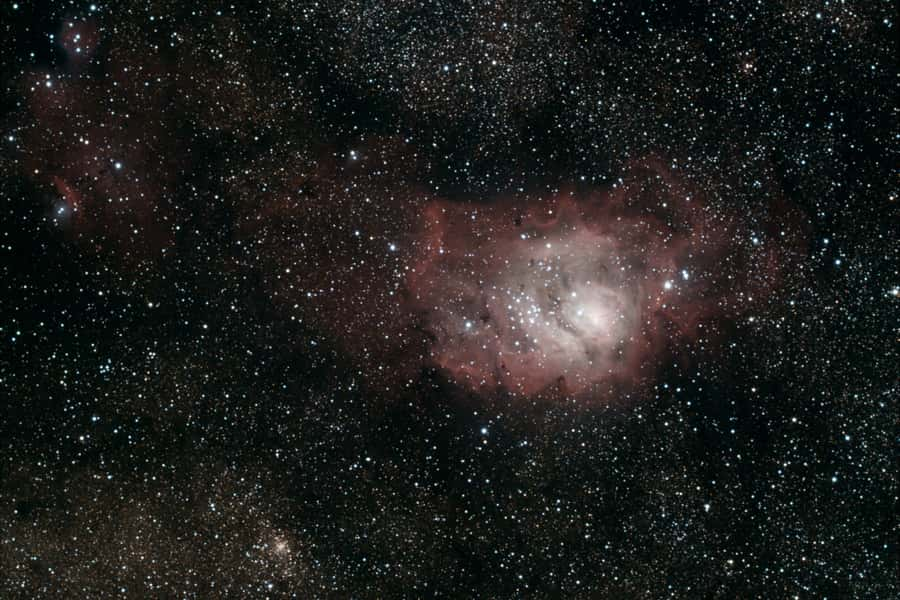
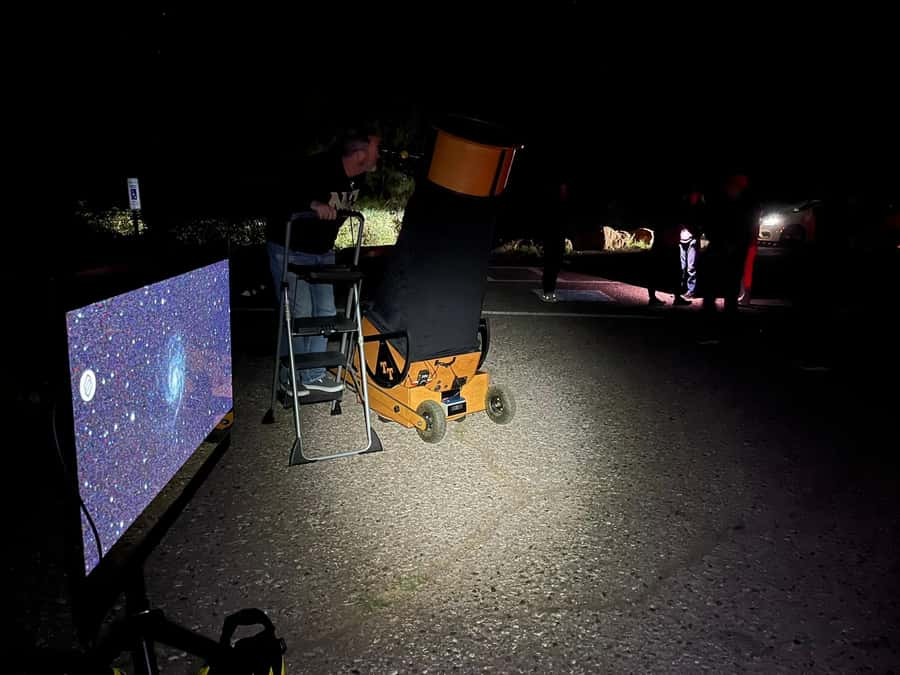
Then comes electronically assisted astronomy (EAA), the video approach where special astronomy cameras capture light more effectively than your eyes can in real time. Those live views stream directly to a 4K OLED TV, so the faint stuff becomes visible with color and detail you’d otherwise miss.
EAA is not a gimmick. It’s a practical workaround for a basic physics problem: deep-sky objects often emit light that’s far too dim for direct human vision, especially under real-world light pollution. The camera exposure and processing pull that light forward so you can actually see what the telescope is gathering.
What You Might See: Moon, Saturn, Nebulae, and More
The exact targets depend on the night and what’s observable, but the tour is clearly designed to show a mix of solar-system sights and deep-space objects.
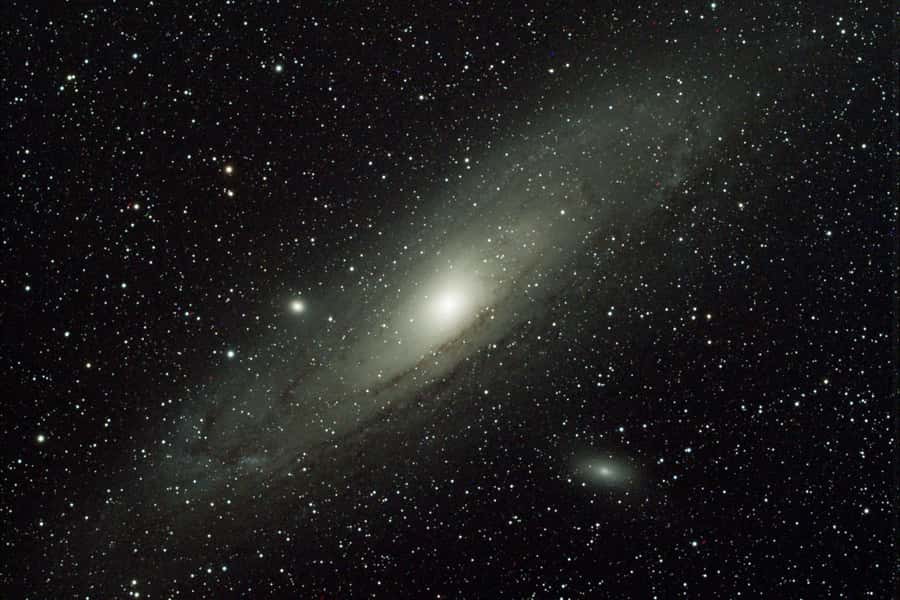
From the deep-sky side, the experience specifically highlights views that you can expect to see through the video system, such as:
- the pinkish-red hydrogen glow from stellar nurseries
- colorful remnants of dead suns (supernova remnants)
- the shimmering bluish dust around the Pleiades star cluster
- dust lanes in distant galaxies
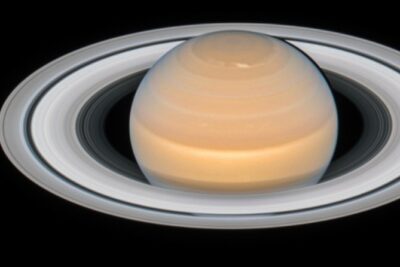
On the brighter side, it’s set up to show major “wow” targets like planets and the Moon. Past bookings describe seeing Saturn and at least a couple of planets during the tour, plus nebulas and additional galaxies.
You may also get a practical bonus: you can ask for a photo of what you viewed afterward. That’s a helpful souvenir because it turns a brief night of observing into something you can share and remember later.




Comfort on a Cold Night: Blankets, Chairs, and What to Wear
A stargazing tour can fail fast if you’re uncomfortable. This one helps you avoid that with padded chairs and blankets, which is exactly what you want when your body starts to feel the temperature drop even if the sky looks perfect.
Still, don’t treat this like a cozy backyard show. You should plan for cold outdoor standing or sitting. The tour’s guidance is straightforward:
- warm clothing, including a jacket
- long-sleeved shirt and long pants
- closed-toe shoes and warm shoes
If you run cold, add a thermos. One booking recommendation was hot chocolate in a thermos, which is the kind of small comfort that makes a night like this much easier to enjoy.
Getting There: Transportation Is on You, and Timing Counts
Transportation is not included, so your ride plan is part of the experience. The meeting sites are on forest lands, and you need access to a vehicle or a tax or ride-share to get there and back.
If you’re using taxi or ride-share, reserve ahead for after the tour. Late-night pickups can be tricky, and the experience itself runs outdoors at night, so you don’t want to lose half your evening waiting in the dark.
One practical note: GPS can be spotty near the final turn at some of these sites. If you’re driving yourself, use your directions early and give yourself extra time. It’s a small thing, but it keeps the night from starting with stress.
Weather Rules: Why Clear Skies Are Non-Negotiable
Stargazing is weather-dependent, and this experience makes that clear. The tour requires clear conditions. If skies are cloudy, the tour may be canceled. It can also be canceled for dangerous weather like storms, flood warnings, or dangerously high winds.
That’s not just “bad luck.” It’s your assurance that when you do go, you’re likely to get a sky worth the ticket. If you’re traveling in a season where weather can be moody, plan to build flexibility into your itinerary.
Who This Works For (And Who Should Skip)
This is a friendly tour in tone and pacing. It’s described as child-friendly and suitable for families, couples, and anyone curious about the universe. That said, there are firm limits:
- not suitable for children under 7
- not recommended for people with limited mobility
- not suitable for wheelchair users
- not suitable for people over 300 lbs (136 kg)
The “why” is simple: you’ll be outdoors at night on uneven terrain. Even if the chairs help, you still need to navigate the site.
If you’re a beginner, this is one of the best kinds of first-timer astronomy experiences because you get both context (what you’re seeing) and results (the view on the screen and through the telescope).
Price and Value: What $125 Buys You in Real Terms
At $125 per person for about 90 minutes, you’re paying for three things at once: time with an astronomer guide, premium equipment, and the chance to see fainter objects through the video setup.
If you were only paying for telescope access, you’d be comparing it to basic “look through this scope” experiences. But this tour adds a second viewing channel: EAA streaming on a 4K OLED screen. That’s a meaningful value boost because it expands what you can see beyond bright targets.
Also, blankets and padded chairs aren’t just comfort perks. They help you stay focused. When you’re not fighting cold, you’re more likely to actually learn the sky and enjoy the guided viewing instead of counting minutes until you’re done.
If you want a stargazing experience in Sedona that’s more educational than passive and more visual than traditional eye-only astronomy, this price is easier to justify.
Quick FAQ for Your Planning
FAQ
Where do we meet for the Sedona stargazing tour?
You meet at a dark-sky site near Sedona. The exact location changes by season under a USFS permit, and you’ll receive full meetup directions after confirmation.
Is transportation to the dark sky site included?
No. You’re responsible for getting to and from the dark sky location. If you use a taxi or ride-share, reserve your pickup for after the tour since it can be hard to find drivers late at night.
How long is the tour, and what language is it in?
The tour runs for about 90 minutes and is guided in English.
What should I bring for a night sky experience in Sedona?
Bring warm clothing: a jacket, long-sleeved shirt, long pants, closed-toe shoes, and warm shoes.
What happens if the weather is cloudy?
Clear conditions are required for stargazing. The tour may be canceled due to cloudy weather, or for dangerous weather like storms, flood warnings, or high winds.
Is the tour suitable for young children or mobility limits?
It’s not suitable for children under 7. It’s not recommended for limited mobility, not suitable for wheelchair users, and the site terrain is uneven at night.
Should you book this Sedona Stargazing Tour?
If your goal is to leave with more than a few minutes of looking up, I’d book it. The combination of laser-taught constellations plus telescope viewing on real targets, then EAA video astronomy on a 4K OLED screen, is a practical way to see both the easy sky and the hard-to-see universe.
Just go in with the right expectations: bring warm clothes, plan your ride because transportation isn’t included, and don’t count on it if the forecast looks messy. If you can do that, this tour has a strong chance of giving you one of the more satisfying, teacher-led nights you can have in Sedona without needing any prior astronomy gear.
More Tours worth a look around Sedona
More Stargazing & Night-Sky Tours over Sedona


More Tour Reviews worth a look around Sedona
Not quite your trip? Here is more to see and do around Sedona



Stargazing & Astronomy Nights, compared.
 ★ 4.5Sedona Stargazing Tours LLCFrom $89881 reviews
 ★ 4.5The Original Sedona UFO and Stargazing Night TourFrom $155269 reviews
 ★ 4.5The Night Sky Star Story, Galaxy, and Sedona Story TourFrom $100243 reviews
 ★ 4.4Nighttime UFO & Stargazing TourFrom $160148 reviews
 ★ 5.0Sedona Dark Sky Sunset & Night Hike With a Private GuideFrom $18586 reviews
 ★ 4.5Sedona UFO/Stargazing Tour (price per goggle not per person)From $16047 reviews
 ★ 5.0Stargazing Tour with Telescopes and Video Astronomy in SedonaFrom $12540 reviews
 ★ 4.5Page: Antelope Valley Canyon Stargazing Night HikeFrom $6537 reviews
Browse the lists this tour appears in