Reviewed · SEDONA
Treasure Hunter Escape Room
It takes one hour to forget reality. That’s the pitch for Treasure Hunter, a Sedona-area escape room set in 1976 with a mystery you can actually solve. I like that it’s built around teamwork and urgency, not just hunting for clues.
Two things I especially like: you get a clear mission (steal an ancient golden artifact and escape), and the format includes pre-game briefing plus a post-game debrief with photos. One possible drawback: it can feel fast and intense, so if your group wants a slow, relaxed pace, this may not match your style.
In This Review
- Key things to know before you go
- Professor Marcus Montgomery’s Office: The 1976 Setting
- The 90-Minute Visit Plan (and Why It Works)
- The Mission: Steal the Golden Artifact and Escape
- How the Puzzles Feel for Different Group Types
- Group Size Limits, Sharing, and the Personalized Experience
- Sedona-Area Logistics: Where to Meet and How Parking Works
- Price and Value: What You Get for $30
- Who This Escape Room Is Best For
- Should You Book Treasure Hunter in Sedona?
- FAQ
- Where is the meeting point for Treasure Hunter?
- How long is the experience?
- How many people can play in one game?
- What is the story and goal of the game?
- What age is this escape room best for?
- Do I need to bring anything to check in?
- Is parking available near the location?
- Can I cancel or change my booking?
Key things to know before you go
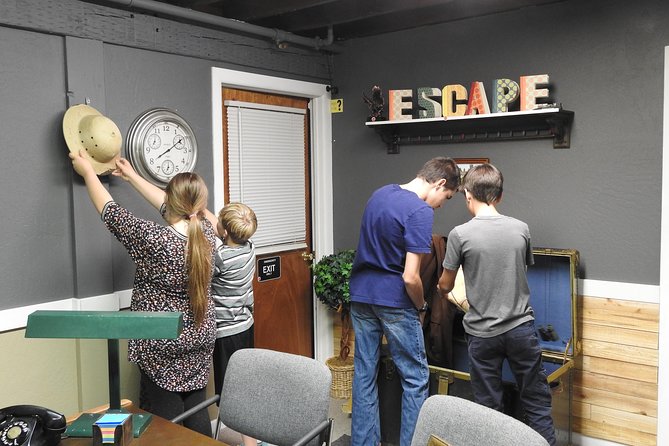
- 1976 storyline in Professor Marcus Montgomery’s office, built for mystery-solving
- 60-minute game time inside a 90-minute overall visit window
- Up to 8 players per game, with easy/medium difficulty
- Steal the ancient golden artifact and use clues to escape
- Crew photos after you finish, plus a short debrief
- Check-in 15 minutes early so you don’t cut into puzzle time
Professor Marcus Montgomery’s Office: The 1976 Setting
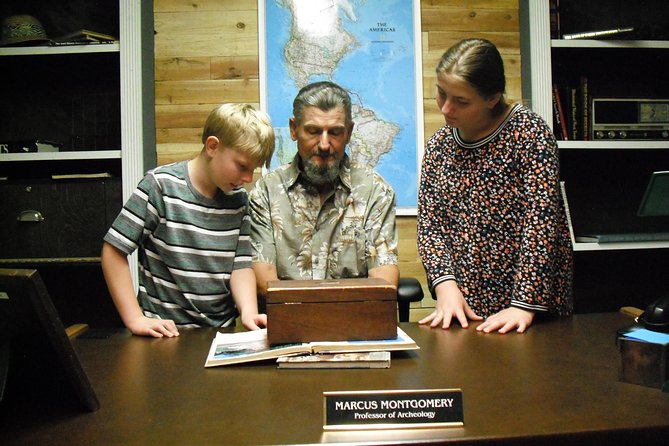
Treasure Hunter is set in the office of Professor Marcus Montgomery in the year 1976. Your job is to investigate his untimely death and work your way through a conspiracy tied to the clues you uncover. The setup is designed to get you thinking like a case team: look closely, share what you find, and act quickly once the story starts moving.
The year detail matters. When a room leans into a specific time period, it tends to guide how puzzles feel and how you interpret what you’re seeing. Here, the 1976 framing gives the game a consistent tone, so your group can stay focused instead of wondering what rules apply or why a clue exists.
Still mapping out your days? Browse more red-rock tours and experiences around Sedona.



The 90-Minute Visit Plan (and Why It Works)
The total visit is about 1 hour 30 minutes, and the structure is simple:
- Check in 15 minutes before your start time
- 15 minutes before the game to get ready for your mission
- 60 minutes of puzzle time to complete your task and escape
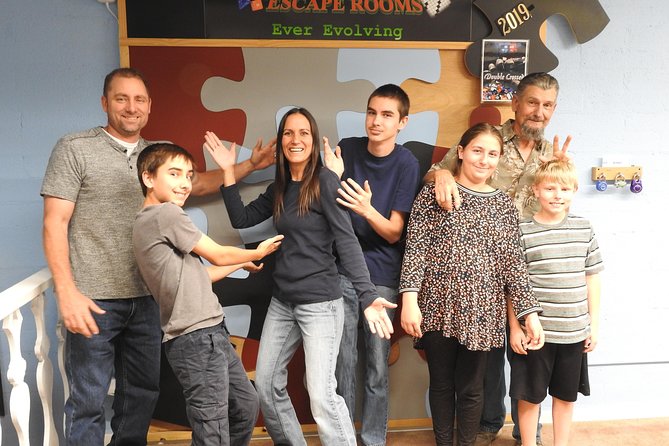
- 15 minutes after for a debrief and photos
That rhythm is a big part of the value. You’re not just dropped into a room and left to figure everything out. You get time to get organized, then a focused block to solve, then a wrap-up that helps you leave with a clearer sense of what you did well and what the story was driving toward.
If you’re the type who worries about running late, build in the early check-in buffer. The room itself runs on schedule, and losing even a few minutes can pressure a group that’s already racing the clock.
The Mission: Steal the Golden Artifact and Escape
The headline goal is to steal an ancient golden artifact to complete your mission. To do that, you’ll collect clues, solve puzzles, and reach your escape within the 60-minute target.
What I like about this setup is that it keeps the game goal-front and center. You’re not just solving for fun in a vacuum—you’re solving toward a concrete win condition. That helps everyone in your group stay aligned, even if people have different puzzle strengths (spotters, logic solvers, pattern finders, and the person who reads instructions twice).
Also, the room’s difficulty is labeled Easy/Medium, and it’s capped at 8 players. That combo usually means the puzzles should be approachable for mixed groups, including first-timers, while still offering enough challenge to feel rewarding if you’re thinking hard.
How the Puzzles Feel for Different Group Types
Treasure Hunter is a group activity, and success here is about how your team works together. Some rooms reward one or two puzzle brains. This one rewards the case-file approach: share clues quickly, test ideas in small steps, and rotate attention so no one part of the room gets ignored.
If your group includes:
- First-time escape room players: The early prep time helps you get oriented. You’re also given a storyline to anchor your thinking, which reduces the awkward phase of not knowing what to do first.
- Puzzle fans: You’ll likely enjoy the clue chain that links investigation to action. The urgency of the 60-minute goal pushes you to keep momentum.
- Families with kids (age 10+ recommended): The room’s easy/medium label suggests it’s built to be workable with guidance from adults on site.
One thing to keep in mind: the game is rated for ages 10 and up, but younger participants are allowed. Still, some games may be too difficult for younger kids, so plan based on your group’s comfort with problem-solving.
Group Size Limits, Sharing, and the Personalized Experience
The room is maximum 8 travelers, with easy/medium difficulty. The experience can be limited to your group, which makes it feel more personal and lets your team move as one unit.
Here’s the practical catch: unless you book out the entire room, you could be joined by other players. That doesn’t automatically make it worse, but it does change the social vibe. If you want a truly private feel—for birthdays, team outings, or groups that prefer to keep their roles tight—try to coordinate so you’re not sharing space.
So my advice is simple: if privacy matters, plan your booking accordingly. If you’re flexible and just want a fun challenge with others, sharing can actually add energy.




Sedona-Area Logistics: Where to Meet and How Parking Works
Even though you’ll hear it as a Sedona activity, the meeting point is in Cottonwood, AZ:
551 S Main St, Cottonwood, AZ 86326, USA
The activity ends back at the meeting point, so you’re not juggling drop-offs or complicated returns.
Parking is straightforward:
- Free parking is in the lot behind the building
- Or anywhere in the connecting parking area around State Farm Insurance
Also, you’ll need to show your Viator Voucher as proof of purchase. And since it’s mobile ticket based, bring your phone with the ticket ready (and make sure you’ve got enough battery).
Price and Value: What You Get for $30
At $30 per person, Treasure Hunter sits in the “serious value” zone for an escape room with a full storyline, a set time limit, and structured wrap-up.
What makes the price feel fair is the package:
- All taxes, fees, and handling charges included
- A complete 90-minute visit experience (prep, 60-minute game, debrief, photos)
- A defined mission with a clear goal and an easy/medium difficulty range
- A group size that doesn’t balloon beyond 8
In other words, you’re paying for time-boxed entertainment where you’ll know when it starts, when it ends, and how it ends. You also get something many rooms skip: photos of your crew after the task is complete.
If you’re deciding between this and another activity in the Sedona area, compare what you’ll remember later. A good escape room leaves you with a shared story—who solved what, what went wrong, and what clue finally clicked.
Who This Escape Room Is Best For
Treasure Hunter fits best for groups that enjoy problem-solving together and can handle a quick pace.
It’s especially good for:
- Families where kids are at least 10 and adults are willing to stay engaged
- Small groups and couples who want a shared challenge
- Corporate groups that want a low-pressure icebreaker built around teamwork (the room is designed for groups, including corporate bookings)
- First-time escape room fans who want structure and a storyline to follow
A key rule for safety and participation: an adult (18+) must remain on site with anyone 15 and under. And all participants under 18 need an adult-signed waiver before they can play.
Service animals are allowed, which is helpful if your group needs that accommodation.
Should You Book Treasure Hunter in Sedona?
I’d book Treasure Hunter if you want a fast, story-driven escape room with a clear mission, a manageable group size, and a built-in debrief where your crew can leave feeling like the experience made sense.
Skip it—or at least think twice—if your group strongly prefers a slow pace, long explanations, or flexible timing. The clock is part of the design: you’ll have 60 minutes to solve and escape, with urgency baked in.
FAQ
Where is the meeting point for Treasure Hunter?
It starts at 551 S Main St, Cottonwood, AZ 86326, USA and ends back at the same meeting point.
How long is the experience?
Plan for about 1 hour 30 minutes total, with 60 minutes for the game itself.
How many people can play in one game?
The game is capped at 8 players max.
What is the story and goal of the game?
You’ll investigate the untimely death of Professor Marcus Montgomery in 1976 and try to uncover the conspiracy. Your mission includes stealing an ancient golden artifact and escaping by solving puzzles.
What age is this escape room best for?
It’s recommended for ages 10 and up. Younger participants may be allowed, but the games may be too difficult for them. An adult 18+ must remain on site with anyone 15 and under, and participants under 18 need an adult-signed waiver.
Do I need to bring anything to check in?
You should show your Viator Voucher. Since it’s a mobile ticket activity, keep your ticket accessible on your phone.
Is parking available near the location?
Yes. There’s free parking in the lot behind the building, or in the connecting parking area around State Farm Insurance.
Can I cancel or change my booking?
This experience is non-refundable and can’t be changed.