

Reviewed · GRAND CANYON DAY TRIPS FROM SEDONA
Grand Canyon and Sedona Self-Guided Driving Tour Bundle
Sedona plus the Grand Canyon in one drive is a great combo. This self-guided audio route strings together red-rock viewpoints and South Rim highlights with hands-free narration that cues you based on where you are.
What I like most is the freedom: you can stop for photos, swap in shorter walks, or linger longer at the overlooks without coordinating with a group. I also like the offline setup. Once you download in good signal, the tour works where service is unreliable, so your plans don’t fall apart mid-canyon.
One consideration: the audio depends on you starting at the right spot and following the route closely. If the setup wasn’t done beforehand (or you wander off-route), you can end up with missing narration at key stops.
In This Review
- Key Things You’ll Notice on Day One
- Price and Value: Why This Bundle Can Beat a Bus Tour
- Offline Audio That Works When You’re Off the Grid
- The Sedona Start: Tlaquepaque Arts Village and the Cathedral Rock Hustle
- Movie Sets and Pioneer Stories: Schnebly, Zane Grey, and Marguerite Staude
- Courthouse Butte Views and Sedona Trail Options You Can Pick
- Village of Oak Creek: Your Post-Hike Reset
- Pyramid Mountain Loop: Munds Mountain Trail for Sacred-Feeling Vistas
- Crescent Moon Ranch Road and the Picnic-View Payoff
- Red Rock State Park: A Quick Nature Buffer Before the Long Drive
- Entering Grand Canyon: South Rim Basics at Mather Point and Yavapai
- Hopi Dwellings to Rivalry Studios: Hopi House, Lookout Studio, and Kolb Studio
- Hermit Road Shuttle Stops: Trailview Overlook Through Navajo Point Views
- Desert View Drive Finale: Pipe Creek to the Watchtower at the Canyon’s Edge
- Optional Extra Time: South Kaibab Trail and Tusayan Ruins Museum
- Time Reality Check: How to Make 5 to 6 Hours Actually Work
- How to Avoid the Common App Problems (GPS Sync and Start Point Issues)
- Who This Bundle Is Best For (and Who Might Want Something Else)
- Should You Book This Grand Canyon and Sedona Driving Tour Bundle?
- FAQ
- How much does the Grand Canyon and Sedona self-guided driving tour bundle cost?
- How long does the tour take?
- Does it work offline in the national parks?
- Do I need cellular service during the tour?
- Where do I start, and who meets me?
- How do I play the audio in my car?
- Are park entry fees or attraction tickets included?
- What are the tour operating hours?
- Can I cancel for a refund?
Key Things You’ll Notice on Day One

- Offline audio + offline maps after you download with strong Wi‑Fi/cellular
- 35+ audio stories across Sedona and the Grand Canyon, triggered by location
- Go-at-your-own-pace stops: pull off, park, listen, then continue when you’re ready
- Value per car: one purchase covers up to four people, not per person
- Free park shuttle integration for Hermit Road viewpoints inside Grand Canyon
Price and Value: Why This Bundle Can Beat a Bus Tour
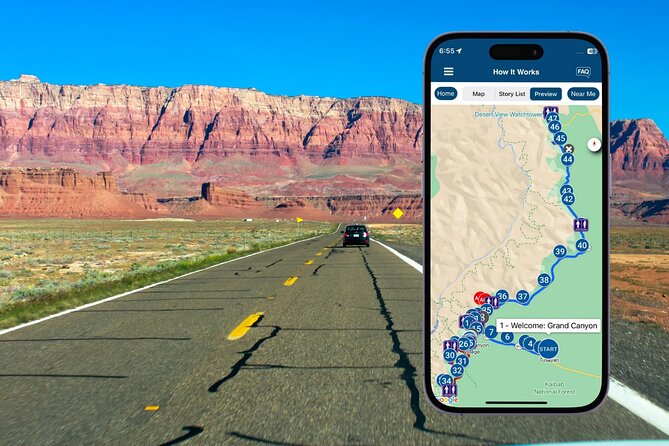
At $24.99 per group (up to 4), this is priced like a “buy once, play all day” option. The real value is that you’re not paying for transportation inside the sights the way you would with a guided van. You’re essentially using your own car as the transport, while paying for direction and storytelling.
Also, the bundle uses lifetime access with no expiry. That matters more than it sounds: Grand Canyon and Sedona are repeat-worthy places. If you come back in a different season, you can replay the stories (and re-hit any viewpoint you missed).
Plan more Grand Canyon day trips out of Sedona
Offline Audio That Works When You’re Off the Grid
This tour is designed around the reality of national parks: spotty or absent cellular service. You’ll download the tour through Action’s Tour Guide App after booking, using strong Wi‑Fi/cellular while you still have signal. After that, the tour works offline.
In the car, you can connect your phone to your stereo using Bluetooth, USB, or AUX. For walking sections, I’d strongly consider headphones—less fiddling with volume while you’re moving.
Important practical tip: the audio begins when you’re at the tour’s starting point/story point. Then it plays automatically as you follow the route cues. Treat it like a “guided car trip,” not like a podcast you can start anywhere.
The Sedona Start: Tlaquepaque Arts Village and the Cathedral Rock Hustle

Sedona often feels like it runs on red rock and good timing. The tour starts by getting you into the rhythm of the town—then gives you a classic Sedona landing spot: Tlaquepaque Arts Shopping Village. Plan for time here if you want browsing and a quick bite. It’s also a handy place to reset before hikes and pull-offs.
Then you’re directed toward the Cathedral Rock Trailhead. This is the “yes, it’s steep” moment. The hike is about 1.2 miles one-way-ish in trek length with around 800 feet of elevation gain, and it’s described as challenging. If you’re not feeling it, the tour still lets you enjoy Cathedral Rock views without committing to the full ascent.
What’s smart here is that you control how hard you go. That’s a big advantage when you’re mixing a scenic drive with a hike-based destination.
Movie Sets and Pioneer Stories: Schnebly, Zane Grey, and Marguerite Staude

After the physical wow-factor, the tour shifts gears into the kind of stories that make Sedona feel layered. You’ll hear how Sedona’s early pioneer era connects to people like T.C. Schnebly—including the fact that he helped build early community infrastructure like the first hotel, general store, and the first post office (1902).
Then the audio moves into Hollywood history with Zane Grey, including his film crew and the making of the silent western Call of the Canyon. This is the kind of background that helps you understand why the canyon country became a magnet for filmmakers.
Another standout story is Marguerite Staude, a local rancher and sculptor. She was inspired by something as far away as the Empire State Building—then translated that scale into a Sedona landmark experience, tied into Marg’s Draw Trail (the tour notes it as a mid-length trail with about 4 miles out and back).
This section is also where you’ll get a deeper “why these rocks look famous” angle—not just names of places.
Courthouse Butte Views and Sedona Trail Options You Can Pick
The tour sets you up to see Courthouse Butte from a parking lot. If you want more, it mentions you can access multiple trails from that area. That’s useful because Sedona trail access can vary by season, crowds, or your energy level.
If your group wants variety, you can also choose among additional options:
- Red rock photo stops that don’t require a full hike
- Mid-length walks where you get close-up rock views
- A chance to enjoy Sedona without racking up too many miles
This is one of the bundle’s quiet strengths: it doesn’t force you into one “perfect hike.” It gives you options and lets you steer.
Let a local lead the way on more guided outings in Sedona




Village of Oak Creek: Your Post-Hike Reset
Village of Oak Creek is where the tour gives you an easy break. It’s described as full of shops and restaurants, which makes sense after a hike-heavy first stretch.
If you want a quick scenic stop, the tour also points you toward Lover’s Knoll—a scenic vista often used for romantic photos and easy views.
You’ll spend about 2 hours here in the flow described, but you can shorten it. This is a good place to refuel, stretch, and decide whether your next hike is “keep it short” or “go for it.”
Pyramid Mountain Loop: Munds Mountain Trail for Sacred-Feeling Vistas
Next is Munds Mountain Trail, which the tour connects to the Pyramid Mountain Trail. It’s described as a 2-mile loop that takes about an hour (so it’s manageable even if your earlier hikes ran long).
The audio adds a context layer about why some people consider this land sacred. That doesn’t turn it into a history lecture—it mainly helps you interpret the stillness and the way the land feels more present than just scenic.
Crescent Moon Ranch Road and the Picnic-View Payoff
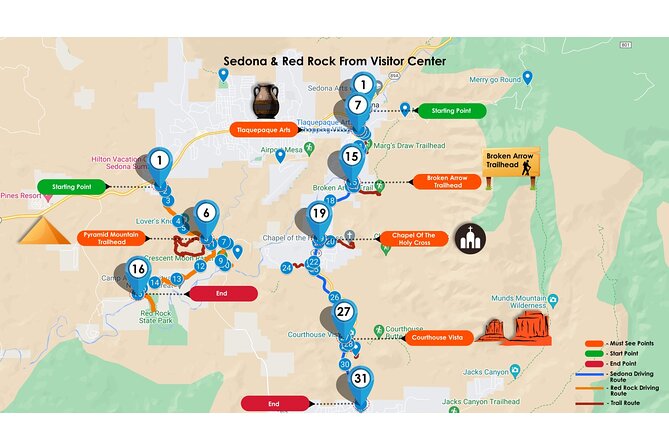
Then comes Crescent Moon Ranch Road, including a note that it’s worth the price, but you can turn around before the ticket booth if you’d rather skip it.
From there, you get to the Crescent Moon Picnic Site—described as a creekside sanctuary with spectacular views, and even notes about swimming. The tour also calls out that Cathedral Rock is visible from here and that it’s one of Sedona’s most photographed views.
This stop is a perfect “reward after effort” moment. You did hikes. Now you get a calmer, sit-down version of the magic—without needing more elevation gain.
Red Rock State Park: A Quick Nature Buffer Before the Long Drive
The tour routes you through Red Rock State Park—a smaller but meaningful patch of trails, biking options, picnic areas, and scenic vistas.
Practical angle: this is a good buffer stop if you need to use the restroom, get a short walk in, or burn a bit of time before transitioning to Grand Canyon driving.
Entering Grand Canyon: South Rim Basics at Mather Point and Yavapai
Once you reach Grand Canyon National Park, the tour starts near the South Entrance Station, where you’ll get info about entrance fee options. It then routes you to the Visitor Center for maps, park info, restrooms, and snacks.
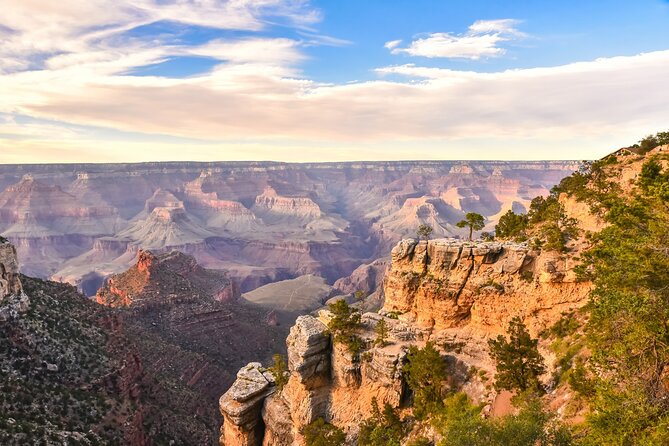
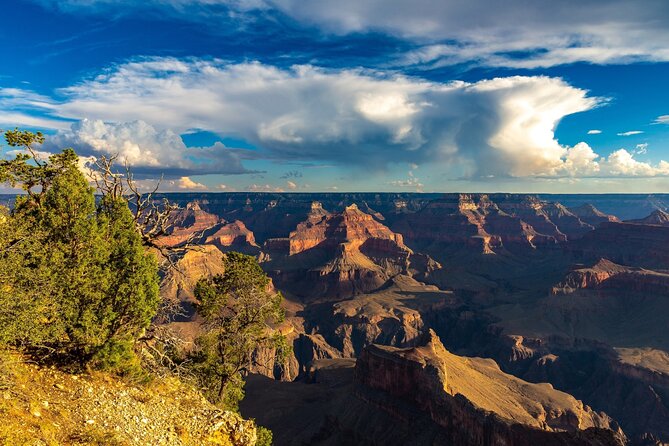
Your first major overlook is Mather Point, described as a top spot with visibility up to 30 miles across the canyon. From there you move to Yavapai Point, including a note about the tribe for whom the point is named.
Inside the village area, you’ll see major learning and cultural stops:
- Hopi House, an accurate recreation of ancient Hopi dwellings, plus a place for handmade souvenirs
- Yavapai Geology Museum for exhibits on the canyon’s geological history
Hopi Dwellings to Rivalry Studios: Hopi House, Lookout Studio, and Kolb Studio
This part adds story flavor beyond the views. The audio takes you through Hopis House, then connects to the geology museum, and moves into a fascinating piece of frontier-style rivalry between Lookout Studio and Kolb Studio.
If you like learning how “tourism” history evolved in the Grand Canyon, this section is satisfying. It gives you a sense that people have been staging and studying canyon experiences for a long time—not just modern visitors snapping selfies.
Hermit Road Shuttle Stops: Trailview Overlook Through Navajo Point Views
After the initial village stops, the tour tells you to hop on the park’s free shuttle and follow the audio instructions. This matters because Hermit Road has multiple viewpoints without needing to fight parking.
Key Hermit Road highlights you’ll reach by shuttle include:
- Trailview Overlook, with views of the Bright Angel Trail—a reminder of how serious the descent is
- Maricopa Point, which includes unexpected history tied to a uranium mining operation
- Powell Point, honoring the explorer who charted the Colorado River
- Hop i Point, with a focus on bald eagles and how to spot them
- Mohave Point for a river view
- Monument Creek Vista with notes about Granite Rapids, plus the story of the first female river guide
- Pima Point, described as a great place to listen if the vista is quiet—because you might hear water movement
This isn’t just “look left, look right.” The audio is nudging you to experience the canyon in multiple ways: sightlines, names, sounds, and the human stories wrapped around them.
Desert View Drive Finale: Pipe Creek to the Watchtower at the Canyon’s Edge
After the Hermit Road portion, you continue along Desert View Drive. This is where the route keeps widening the lens.
Notable stops include:
- Pipe Creek Vista, a favorite for birders, with mention of the ultra-rare California condor
- Duck on a Rock Viewpoint, where you can see the famous oddly shaped rock formation some claim looks like a duck
- Grandview Point, which also acts as a hiking trailhead below the rim
- Lipan Point, adding more about geology and the river view
- Navajo Point, described as the highest viewpoint on the southern rim at about 7,500 feet above sea level
- Desert View Watchtower, a stone structure on the rim, with notes that depending on season you can climb for an even bigger view
It ends at Desert View Watchtower, with a mention of a remote lookout spot used for sunrise and sunset viewing and that it includes restrooms.
Optional Extra Time: South Kaibab Trail and Tusayan Ruins Museum
Your route information also includes:
- South Kaibab Trail: described as a ridge walk toward Skeleton Point for 360-degree views
- Tusayan Ruins and Museum: a learning stop about ancient cultures, including a walk through ruins with signage
I’d treat these as “if you have the energy” add-ons. With a bundle that includes multiple hikes and lots of viewpoints, time gets tight fast. Still, they add variety—one for big panorama walking, one for cultural context.
Time Reality Check: How to Make 5 to 6 Hours Actually Work
The total time is described as about 5 to 6 hours, but the stops themselves suggest you can easily stretch it longer depending on how many hikes you do.
Here’s a practical way to think about it:
- If you do Cathedral Rock (steep, 800 feet gain), plan extra recovery and water time.
- Marg’s Draw Trail at about 4 miles out and back takes real effort.
- Pyramid Mountain Trail is more manageable (2-mile loop around an hour).
- Crescent Moon picnic is easier on the body, which helps you stay on schedule.
- Grand Canyon portions can be quick at overlooks, or slow if you hike—especially with the shuttle sections.
If you want the most stress-free day, I’d pick one “real hike” in Sedona, then treat Grand Canyon primarily as viewpoint time with short walks where possible.
How to Avoid the Common App Problems (GPS Sync and Start Point Issues)
The best advice I can give you here is simple: do the setup right before you go, and start the audio at the correct first point.
A cluster of issues in feedback patterns centers on:
- confusion about which tour version to use in a bundle
- audio not triggering because the starting point wasn’t correct
- audio cutting out when download wasn’t completed with enough signal beforehand
- difficulty following directions long enough to miss photo stops and then lose the trail cue
So, do this:
- Download the tour while you have strong wifi/cellular
- When you arrive, open the correct tour in the app based on your planned starting point and direction
- Start the audio at the tour’s starting story point so GPS syncing can trigger narration at each stop
- Follow the route cues and speed limit for the smoothest audio flow
Also note: integration with car tech is partial. The info states Apple CarPlay support for audio playback (with navigation features coming soon), and Android Auto support is also on the way. One review experience reported Android Auto compatibility as a problem, so if Android auto is your plan, consider having a Bluetooth/AUX fallback.
Who This Bundle Is Best For (and Who Might Want Something Else)
This bundle is a good match if you want:
- flexibility (stop when you want)
- story-driven sightseeing without a guide riding along
- a plan for remote areas where you can’t count on service
It’s especially good for couples or small groups in a single car because it’s priced per group up to four.
It might be less ideal if:
- you hate apps and prefer paper maps
- you’re traveling with very limited patience for phone setup
- your group needs very hands-off guidance and consistent turn-by-turn navigation
Should You Book This Grand Canyon and Sedona Driving Tour Bundle?
If you want maximum value for one car, and you’re comfortable with a phone-guided, audio-triggered route, I think this is worth booking. The offline-first design, the lifetime access, and the mix of Sedona and Grand Canyon viewpoints make it a smart way to save time and avoid crowded tour scheduling.
Skip it if you know your group will struggle with tech setup or you’re planning to rely on cellular signal in remote areas. In that case, the safest bet is to plan an offline-friendly strategy—download in advance, start on the correct point, and then let the narration run.
FAQ
How much does the Grand Canyon and Sedona self-guided driving tour bundle cost?
It costs $24.99 per group (up to 4 people). The purchase is per car/group, not per person.
How long does the tour take?
It’s listed as about 5 to 6 hours total (approx.). The Sedona section is described as about 2 to 3 hours and the full route is over 9 miles.
Does it work offline in the national parks?
Yes. After you download the tour while you have strong wifi/cellular, it works offline.
Do I need cellular service during the tour?
No for playback. You do need cellular or Wi‑Fi while downloading and setting up the tour beforehand.
Where do I start, and who meets me?
No one meets you. This is self-guided. You need to go to the starting point and the audio begins automatically at the first story’s point.
How do I play the audio in my car?
You can connect your phone to your car stereo using Bluetooth, USB, or AUX. Headphones are suggested for walking sections.
Are park entry fees or attraction tickets included?
No. Attraction passes, entry tickets, or reservations are not included.
What are the tour operating hours?
Opening hours are 8:00 AM to 6:00 PM, Monday through Sunday.
Can I cancel for a refund?
Free cancellation is available up to 24 hours in advance for a full refund.
More Tours worth a look around Sedona

More Grand Canyon Day Trips from Sedona

More Tour Reviews worth a look around Sedona
Not quite your trip? Here is more to see and do around Sedona



Grand Canyon Day Trips from Sedona, compared.
 ★ 5.0Small-Group Grand Canyon Complete Tour from Sedona or FlagstaffFrom $2081,928 reviews
 ★ 5.0Grand Canyon Complete Day Tour from Sedona or FlagstaffFrom $208549 reviews
 ★ 5.0Grand Canyon Deluxe Day Trip from SedonaFrom $196506 reviews
 ★ 5.0Private Grand Canyon Day TourFrom $317347 reviews
 ★ 4.9The Grand Canyon Classic Tour From Sedona, AZFrom $191343 reviews
 ★ 5.0The Perfect Grand Canyon Tour with Local Expert GuidesFrom $189280 reviews
 ★ 5.0Grand Canyon Small Group Tour from Sedona or FlagstaffFrom $196253 reviews
 ★ 5.0PRIVATE Grand Canyon from SedonaFrom $369228 reviews
Browse the lists this tour appears in