
Reviewed · TOURS
City of the Star People Tours
Sedona feels different after the rock names click. This 4-hour private tour by City of the Star People Tours uses big view stops and guided explanations led by Mark Amaru Pinkham, so you’re not just driving past landmarks—you’re learning how to read them. I like the way the guide handles questions directly, with a patient, take-your-time tone.
My favorite part is the pause for meditation at the Amitabha Stupa and Peace Park, centered on the Amitabha Vortex in the 6 Pointed Star Temple. It gives the tour a breath of calm inside an active sightseeing loop. You also get time at major Sedona energy-style sites, not only quick photo stops.
One drawback to consider: this isn’t a neutral, geology-only ride. If you prefer getting out and walking around constantly, or you strongly dislike metaphysical or religious framing, you may feel you spend too long listening while staying in one place.
In This Review
- Key highlights
- City of the Star People Tours: what kind of Sedona tour is this?
- Meeting at Whole Foods (9:00 am) and planning for a smooth morning
- Stop 1: Sedona Airport Scenic Overlook and the famous rock lineup
- Stop 2: Amitabha Stupa and Peace Park meditation at the 6 Pointed Star Temple
- Bell Rock, Sedona’s 7th Chakra, and the Throne of Ganesh
- Temples, Masau’u the Guardian, and the Chimney Rock sequence
- The Sedona Grid vortex stop and the Pleiadian Contact Zone
- Sphinx and Honey Bear: a lighter, memorable end
- Price and value: what you get for your time
- Who should book this Sedona tour, and who might pass?
- Should you book City of the Star People Tours?
- FAQ
- How long is the City of the Star People Tours experience?
- Where does the tour meet, and when does it start?
- Is this tour private or shared?
- What language is the tour offered in?
- Are admission tickets included?
- What happens if weather is bad?
- What is the cancellation policy?
Key highlights
- Private for your group: it’s not a big cattle-car tour.
- Admission tickets included at the Sedona Airport Scenic Overlook and Amitabha Stupa and Peace Park.
- Rock formations with story context: Great Dragon of Sedona, Standing Eagle Rock, Chimney Rock, Ship Rock, and Saddle Rock.
- Amitabha Vortex meditation at the 6 Pointed Star Temple in Peace Park.
- Sedona Grid and Pleiadian Contact Zone stop for a distinctly cosmic theme.
- Easy meeting point at Whole Foods Market at 9:00 am, ending back where you start.
City of the Star People Tours: what kind of Sedona tour is this?
This tour mixes classic Sedona sightseeing with a metaphysical lens. You’ll spend about 4 hours moving through famous formations and energy-themed landmarks, and the guide ties the stops together with explanations, stories, and a short meditation component.
The vibe is structured but not rigid. You’ll be paired with enough context to make the sites feel connected, not random. It’s also private, so your group can ask questions and set the pace more than on larger shared tours.
If you’re into Sedona because you want to feel the “why” behind the place—why people talk about vortex energy, spiritual portals, and sacred geometry—this format fits well. If you mainly want hard facts and you don’t want belief-based framing, go in with clear expectations.
See more of town on other Sedona outings

Meeting at Whole Foods (9:00 am) and planning for a smooth morning
You meet at Whole Foods Market, 1420 W State Rte 89A, Sedona, AZ 86336, starting at 9:00 am. The tour ends back at the same meeting point, which makes it simple for your next activity—coffee, brunch, or a longer hike later.
Bring the basics: water, sunscreen, and shoes that handle uneven ground. Since the experience requires good weather, you’ll also want a light jacket or layers for windier morning conditions. You’ll be outside for scenic viewpoints and temple-style stops, so plan for some standing and short transitions.
A practical tip: arrive a few minutes early. Even with a smooth start, parking and group assembly take a bit of time around popular locations.
Stop 1: Sedona Airport Scenic Overlook and the famous rock lineup
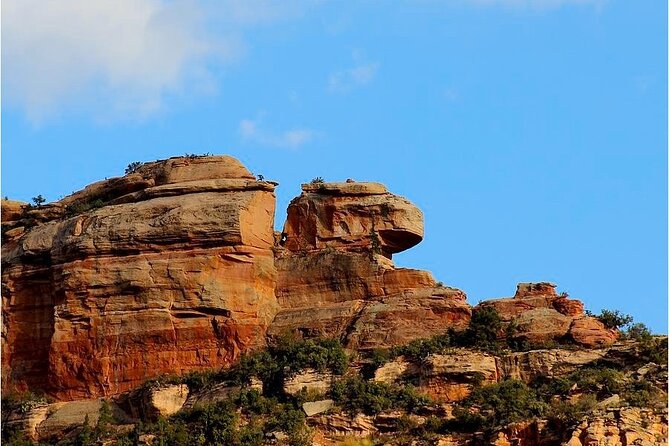
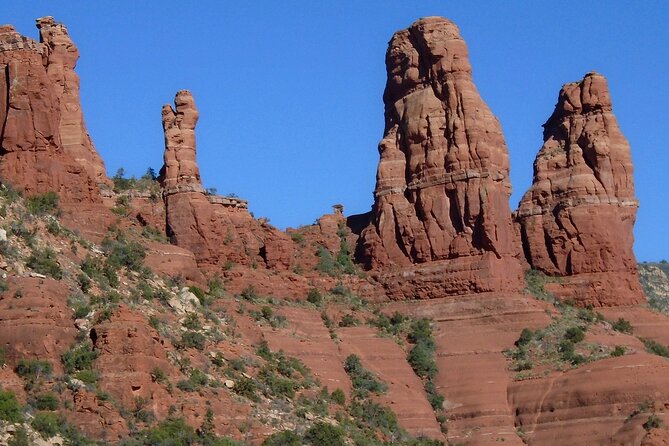
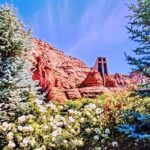
Your first stop is the Sedona Airport Scenic Overlook, where you’ll see several of Sedona’s most recognizable formations: Great Dragon of Sedona, Standing Eagle Rock, Chimney Rock, Ship Rock, and Saddle Rock. This is the kind of stop that helps you get your bearings fast, because the views give you a bigger “map in your head.”
Expect around 25 minutes here, with an admission ticket included. That included entry matters because it turns this into more than a roadside glance. You’re able to focus on what you’re looking at while staying oriented for the rest of the drive.
What makes this stop valuable is how it sets the tone. Instead of jumping straight to smaller, more thematic locations, you start with a cluster of landmarks that people associate with Sedona’s shape and spirit. Even if you’re skeptical, seeing the formations in a guided sequence can change how you notice the terrain.
Stop 2: Amitabha Stupa and Peace Park meditation at the 6 Pointed Star Temple
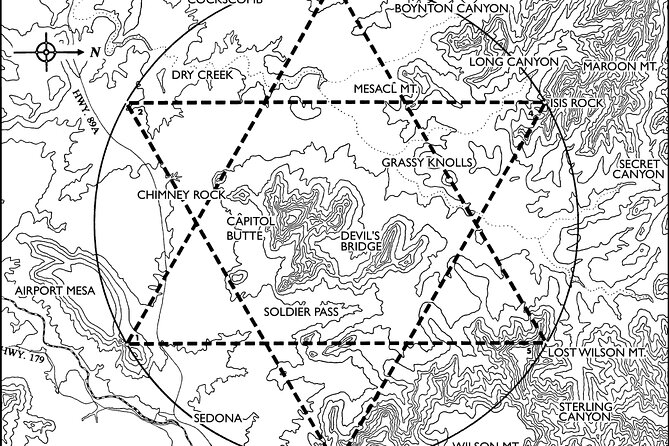
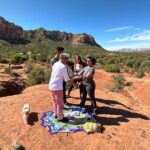
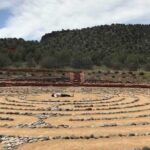
Next is Amitabha Stupa and Peace Park, where the heart of the experience shifts from sightseeing to stillness. You’ll spend about 25 minutes here with a meditation at the Amitabha Vortex, located in the center of the 6 Pointed Star Temple.
An admission ticket is included, so you’re not just visiting the area—you’re stepping into a designed space with a defined purpose. For many people, this is the moment that makes the whole tour feel more intentional. It’s also a welcome change of pace after the driving and viewpoint focus.
If you’re open to the meditation component, treat it as a reset button. Follow the guide’s lead, but keep it simple: quiet attention, breathing, and taking in the setting around you. If you’re not into meditation, keep your expectations grounded—this stop is meant to be a guided, participatory pause.
Bell Rock, Sedona’s 7th Chakra, and the Throne of Ganesh

After the stupa meditation, the tour moves into Sedona sites that come with spiritual labels. You’ll visit Bell Rock and also stop to see Sedona’s 7th Chakra and the Throne of Ganesh.
This is where the tour leans harder into interpretation. Bell Rock is a familiar name for Sedona visitors, but the added chakra framing and Ganesh-themed elements change the lens from pure landmark to symbol-based experience.
Why this section works: it turns “I’ve heard of that” into “I know what to look for and what the guide wants you to notice.” You may not agree with every conclusion, but you’ll likely walk away with clearer language for the way people talk about Sedona.
The potential drawback is also here. If you want to spend every minute scanning rock angles and geology, this is more about meaning than measurements. You’re guided through points of interest, and you might spend some time listening while the tour stays in a set spot.





Temples, Masau’u the Guardian, and the Chimney Rock sequence
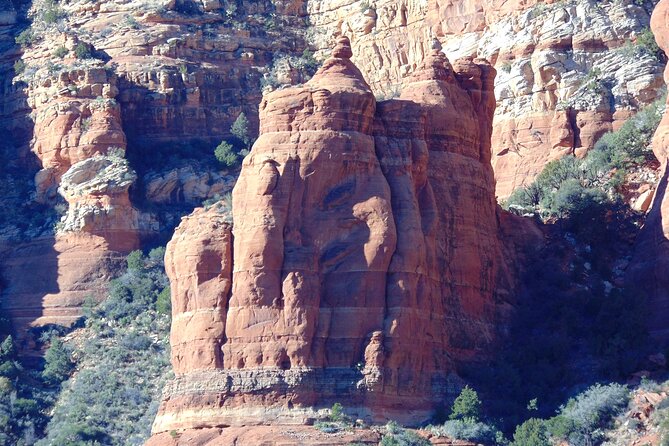
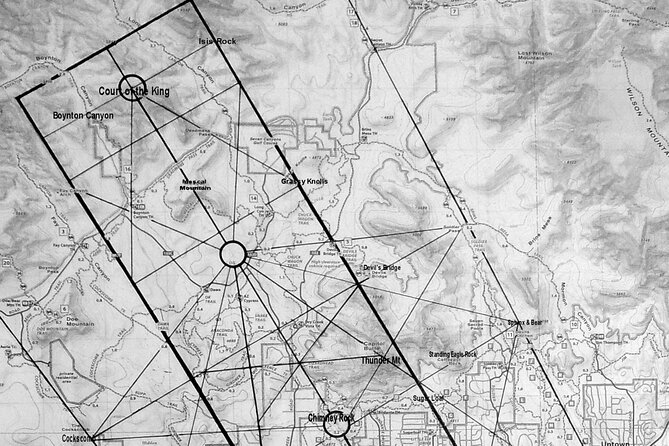
The next set of stops includes temples leading to the Court of Masau’u, the Guardian of Sedona, plus more views tied to Chimney Rock. You’re still in the guided loop, but the focus expands from one landmark at a time into a themed pathway of places.
This part of the tour is built for people who like connecting symbols—how one stop leads to another and how the story is told step-by-step. You’ll come away seeing the site locations as part of a larger map of ideas, not only a pile of scenic points.
One thing to remember: this tour’s pacing depends on the group staying attentive. If your style is to ask a lot of deep questions, you may appreciate a guide who can keep things moving without shutting you down. If your style is to quietly observe, it’s also fine, but you’ll get the most from the experience if you’re willing to stand and listen long enough for the connections to land.
The Sedona Grid vortex stop and the Pleiadian Contact Zone

A major energy-themed stop comes next: a major vortex on the Sedona Grid, labeled as the Pleiadian Contact Zone. This is one of the places where the tour’s metaphysical themes become front and center.
If you’re curious about how people describe Sedona as a place for unusual encounters—spiritual, not necessarily scientific—this stop is one of the best matches in the whole tour. You’ll likely get guided context about why the Sedona Grid idea shows up in the way people talk about the area.
If you’re wary of far-fetched claims, take this portion like a cultural lens rather than a fact test. You can treat it as an interpretive experience: a way to understand why certain visitors come here and why they feel moved. You don’t have to “buy” every concept to still get value from the imagery and guided attention.
Sphinx and Honey Bear: a lighter, memorable end
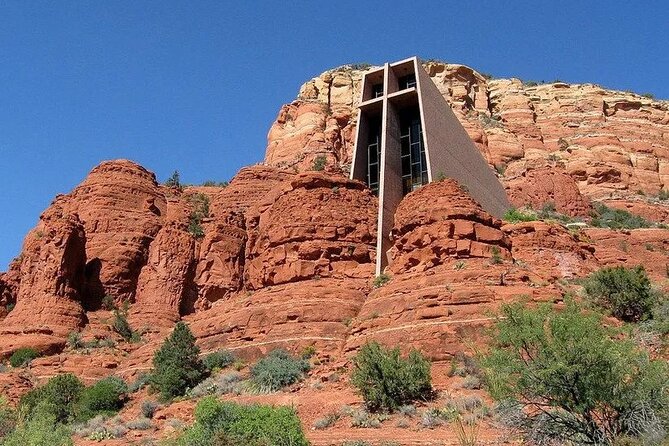
The tour finishes with a look at the Sphinx and Honey Bear. This last part can feel more playful than the vortex-and-temple stops, and that’s a good thing before you wrap up.
This is also where you can compare your impressions. By now, you’ve had multiple layers of Sedona’s “why”: rock formations, meditation, chakra-style framing, temple symbolism, and vortex language. Ending with distinctive figures gives you something visual to anchor the day.
If you’re the type who likes photos and landmarks with immediate recognition, this finale helps. It’s also a reminder that the experience isn’t only about heavy interpretation—there’s room for wonder and curiosity.
Price and value: what you get for your time
Even without a stated cost here, you can still judge value by what’s included and how the time is used.
First, admission tickets are included at the first two main stops: the Sedona Airport Scenic Overlook and Amitabha Stupa and Peace Park. That matters because it removes friction and makes those locations feel like real “entries,” not just quick stops.
Second, the tour is private, meaning you’re not sharing the guide with a large crowd. In a format that relies on listening and explanation, group size changes everything. Smaller groups tend to feel more responsive, and it’s easier to ask questions without slowing down the whole vehicle.
Third, you get group discounts and a mobile ticket, which can simplify the whole day. Practical touches like that are part of value, especially when you’re trying to keep the schedule tight in Sedona.
The main question is fit: if you want a guided spiritual interpretation of Sedona landmarks, you’ll likely feel the time is well spent. If you want mostly walking and independent exploring, this may feel like more standing and listening than you hoped.
Who should book this Sedona tour, and who might pass?
I’d book this if you’re the type who likes your sightseeing with a thread. You enjoy hearing how people connect the landscape to meaning, and you’re curious about vortex-themed lore, meditation, and the story behind named sites.
I’d also consider it if you value a guide who answers questions patiently and keeps the tone thoughtful rather than rushed. The stop choices are designed to move from overview (rock formations) to practice (meditation) to interpretation (chakra, guardians, vortex zones).
You might pass if you mainly want a neutral, factual nature/geo focus. One part of the experience is explicitly belief-based in its framing, and you’ll spend time listening in place rather than constantly wandering off on your own.
A fair way to decide: look at your comfort level with metaphysical content. If that’s a yes for you, this tour can feel like a well-structured guide to the Sedona you came for.
Should you book City of the Star People Tours?
Book it if you want a private, guided Sedona loop that includes meditation, vortex-themed stops, and clear explanations from Mark Amaru Pinkham, with admission included at the key spiritual sites. It’s a good match for people who like to understand what they’re seeing through a spiritual lens.
Skip it if your priority is nonstop roaming and a strictly factual, non-religious presentation. If you’re not sure, treat this like a “meaning-first” tour: the value is in the connected story, not in self-guided exploring time.
If you want, tell me your travel style (quiet observer, big hiker, or likes explanations), and I’ll help you decide whether this is the right Sedona match or a near-miss.
FAQ
How long is the City of the Star People Tours experience?
It runs for about 4 hours.
Where does the tour meet, and when does it start?
You meet at Whole Foods Market, 1420 W State Rte 89A, Sedona, AZ 86336 at 9:00 am.
Is this tour private or shared?
It is private, so only your group participates.
What language is the tour offered in?
The tour is offered in English.
Are admission tickets included?
Yes. Admission tickets are included for the Sedona Airport Scenic Overlook and for Amitabha Stupa and Peace Park.
What happens if weather is bad?
The experience requires good weather. If it’s canceled due to poor weather, you’ll be offered a different date or a full refund.
What is the cancellation policy?
You can cancel for a full refund up to 24 hours before the experience’s start time. If you cancel less than 24 hours before, the amount paid is not refunded.
More Town Tours in Sedona
More Tours worth a look around Sedona

More Tour Reviews worth a look around Sedona
Not quite your trip? Here is more to see and do around Sedona





Tours, compared.
 ★ 4.7Page: Lower Antelope Canyon Entry and Navajo Guided TourFrom $787,801 reviews
 ★ 4.6Page: Antelope Canyon X Guided TourFrom $694,034 reviews
 ★ 4.7Page: Lower Antelope Canyon Tour with Trained Navajo GuideFrom $752,552 reviews
 ★ 4.5Page: Upper Antelope Canyon Entry Ticket and Guided TourFrom $1262,406 reviews
 ★ 4.7Las Vegas: Antelope Canyon Horseshoe Bend Tour & Lake PowellFrom $2292,307 reviews
 ★ 5.0Small-Group Grand Canyon Complete Tour from Sedona or FlagstaffFrom $2081,928 reviews
 ★ 5.0Explore Sedona’s Vortexes: 2.5 Hour Jeep Tour of MysticismFrom $1361,834 reviews
 ★ 5.0Guided ATV Tour of Western SedonaFrom $2381,767 reviews